
A backyard sauna can turn an ordinary outdoor area into a private space for relaxation without requiring a major addition to the house. Among the many residential sauna designs, barrel-shaped models have become especially recognizable because of their compact footprint, curved construction, and distinctive appearance. If you plan to buy barrel sauna for home, however, choosing a model based only on photographs or advertised seating capacity can lead to expensive compromises.
A barrel sauna has different characteristics from a rectangular indoor sauna. The curved walls reduce internal volume and can support efficient air circulation, but they also affect headroom, bench arrangement, insulation possibilities, and usable floor space. Heater capacity, wood species, climate, foundation, drainage, electrical requirements, weather protection, and local building rules can all influence whether a particular model performs well on your property.
Saunas also expose occupants to substantial heat. Anyone with cardiovascular conditions, pregnancy, medications that affect heat tolerance, or other relevant medical concerns should seek individualized healthcare guidance before sauna use. Alcohol and impairing substances should not be combined with high-heat sauna sessions.
This guide covers the practical decisions worth making before purchasing a residential barrel sauna, from selecting capacity and heater type to preparing the site and maintaining the structure.
Why Buy Barrel Sauna for Home Use?
People choose barrel saunas for several practical and aesthetic reasons.
The cylindrical design provides a distinctive appearance that can fit naturally into:
- Backyards.
- Garden areas.
- Pool spaces.
- Rural properties.
- Vacation homes.
Compared with constructing a custom sauna room from the ground up, prefabricated barrel sauna kits may also simplify certain aspects of installation.
The actual difficulty depends on the model, site, utilities, and local requirements.
What Is a Barrel Sauna?
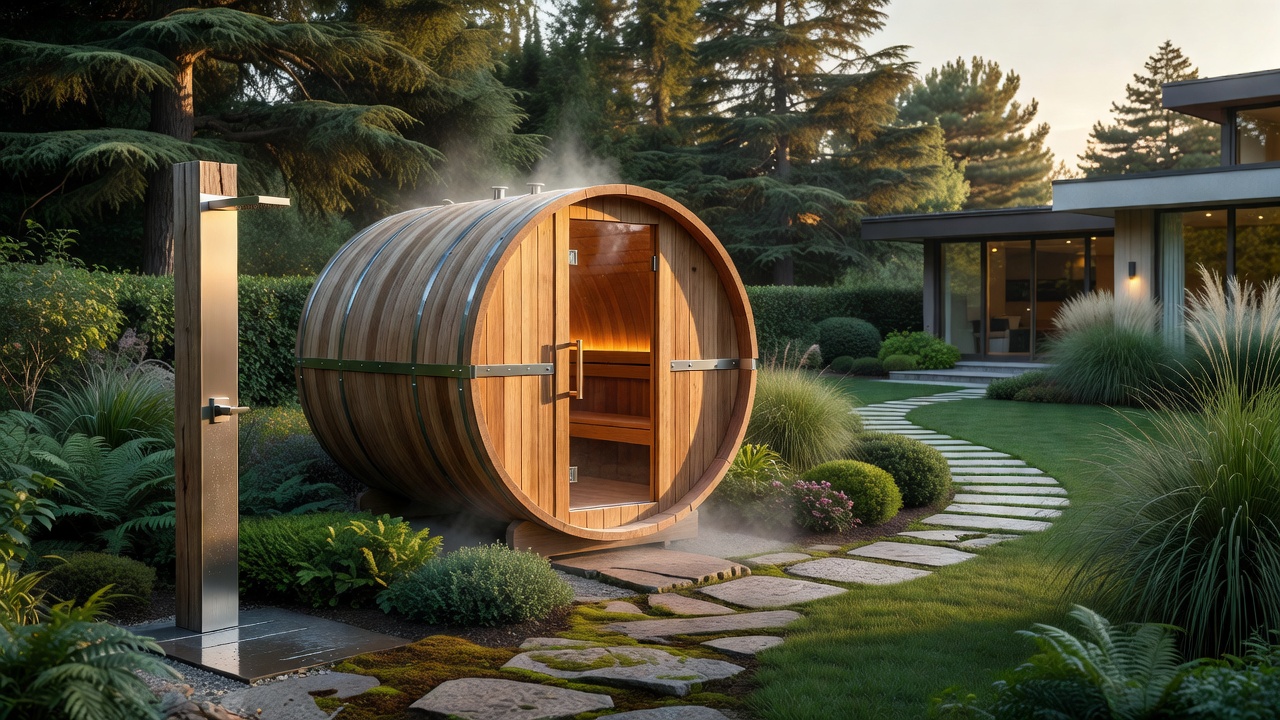
A barrel sauna is generally constructed from curved arrangements of wood staves held together to create a cylindrical or partially cylindrical enclosure.
Typical components include:
- Wood staves.
- Benches.
- Door.
- Heater.
- Heater guard.
- Metal bands.
- Ventilation openings.
- Roof or weather-protection components where provided.
Some kits arrive largely prepared for assembly, while others require more extensive construction.
Review exactly what the manufacturer includes before ordering.
1. Choose the Right Sauna Size
When you buy barrel sauna for home use, advertised capacity should be treated as a starting point rather than the final decision.
A model described for four people may technically provide four seating positions but feel considerably more comfortable with two or three adults.
Ask yourself:
- How many people will normally use it?
- Do you prefer sitting or reclining?
- How much changing space is available nearby?
- How much backyard space can you dedicate?
If you want to lie along a bench, internal length becomes especially important.
Check actual interior measurements instead of relying exclusively on occupancy labels.
2. Compare Wood Species
Wood is both a structural and sensory part of the sauna.
Common sauna materials may include cedar, spruce, hemlock, thermally modified wood, and other species depending on manufacturer and region.
Cedar
Cedar is popular because of its appearance, aroma, and natural resistance characteristics.
Some people, however, may prefer less aromatic wood.
Spruce
Spruce is commonly associated with traditional Nordic sauna construction and can provide a lighter appearance.
Thermally Modified Wood
Thermal modification uses controlled heat treatment to alter certain characteristics of wood.
Specific durability and maintenance claims should be verified for the manufacturer’s product.
Whatever species you choose, look at material grade, thickness, moisture conditions, and construction quality rather than simply the species name.
3. Select the Appropriate Heater
The heater is one of the most important components of a sauna.
Common residential options include electric and wood-burning heaters.
Electric Sauna Heater
Electric heaters are convenient because they provide controllable heat without storing and handling firewood.
Installation may require:
- Dedicated electrical circuit.
- Appropriate voltage.
- Proper conductor sizing.
- Qualified electrical work.
Requirements depend on heater specifications and local electrical codes.
Wood-Burning Sauna Heater
Wood heaters create a traditional sauna atmosphere and may be attractive for rural properties.
However, they introduce additional considerations involving:
- Chimney installation.
- Combustible clearances.
- Fire protection.
- Wood storage.
- Smoke regulations.
- Permitting.
Never install a sauna heater without following the manufacturer’s safety requirements.
4. Prepare a Stable Foundation
A barrel sauna requires a stable, level base.
Potential foundation options can include:
- Concrete slabs.
- Pavers.
- Engineered platforms.
- Other manufacturer-approved foundations.
The correct solution depends on soil, drainage, sauna weight, climate, and local construction requirements.
A poor foundation can allow the structure to shift, affecting doors, bands, staves, and overall stability.
Site preparation should happen before delivery whenever possible.
5. Plan for Weather Protection
If you buy barrel sauna for home installation outdoors, remember that the structure remains exposed throughout the year.
Sun, rain, snow, wind, and moisture can affect exterior wood.
Depending on the product, weather protection may involve:
- Roofing systems.
- Exterior treatments.
- Protective stains.
- Proper drainage.
- Periodic maintenance.
Do not apply interior coatings or exterior treatments without confirming they are suitable for the sauna and recommended by the manufacturer.
Products exposed to high temperatures require particular care regarding material compatibility.
6. Understand Ventilation
A sauna needs controlled airflow.
Ventilation can help support:
- Fresh air.
- Heater operation.
- Drying after use.
- More comfortable conditions.
Vent locations and sizing should follow the heater and sauna manufacturer’s specifications.
Improvising ventilation without understanding the heater system can negatively affect sauna performance.
7. Check Installation Requirements Before Ordering
One of the biggest mistakes is purchasing first and investigating installation later.
Before you buy barrel sauna for home use, determine:
- Final location.
- Access for delivery.
- Foundation requirements.
- Electrical service.
- Heater clearances.
- Local permits.
- HOA restrictions where applicable.
- Property setbacks.
- Chimney requirements for wood heating.
A beautiful sauna kit provides little value if the property cannot accommodate its installation requirements.
How Barrel Saunas Heat Differently
The curved structure results in relatively low internal air volume compared with some rectangular rooms of similar exterior dimensions.
Warm air rises and circulates through the enclosure, while the rounded ceiling avoids some unused corner volume.
However, the curved geometry also influences bench height and where users sit relative to the hottest air.
Traditional sauna design generally benefits from positioning bathers appropriately relative to the heater and vertical temperature gradient.
Some barrel designs limit how high benches can be placed, which is worth considering when evaluating models.
Barrel Sauna vs. Cabin Sauna
Both designs can provide enjoyable sauna experiences, but their layouts differ.
Barrel Sauna
Potential advantages:
- Distinctive appearance.
- Compact structure.
- Often available as kits.
- Reduced internal volume.
Potential compromises:
- Curved walls.
- Limited high bench placement in some designs.
- Less flexible interior layout.
Cabin Sauna
Potential advantages:
- Rectangular interior.
- Greater bench-design flexibility.
- Easier use of multi-level seating in suitable models.
- More conventional wall and roof construction.
The best choice depends on priorities, space, climate, and desired sauna experience.
Barrel Sauna vs. Indoor Sauna
Indoor saunas have the advantage of complete weather protection and direct connection to the home.
Outdoor barrel saunas can provide greater separation and may avoid using interior floor area.
However, outdoor installations require consideration of:
- Weather.
- Utility runs.
- Access.
- Exterior maintenance.
- Local building requirements.
Evaluate total project cost rather than kit price alone.
Understanding Heater Capacity
A heater needs to be appropriately matched to sauna volume and construction.
Manufacturers commonly provide recommended room-volume ranges.
Additional factors can include:
- Glass door area.
- Uninsulated surfaces.
- Climate.
- Construction material.
Do not automatically purchase the most powerful heater available.
Use the sauna and heater manufacturer’s sizing recommendations and seek professional advice where necessary.
Sauna Stones
Traditional electric and wood sauna heaters commonly use appropriate sauna stones to store and distribute heat.
Only use stones approved for the heater.
Incorrect stone type, loading, or maintenance can interfere with airflow or damage equipment.
Follow the heater manufacturer’s instructions regarding:
- Stone size.
- Placement.
- Quantity.
- Inspection.
- Replacement.
Electrical Safety
Electric sauna heaters draw substantial electrical power.
A qualified electrician should perform work requiring professional electrical installation.
The project may involve:
- Dedicated circuits.
- Disconnects.
- Grounding.
- Control systems.
- Lighting.
- Local code requirements.
Do not use extension cords or improvised electrical arrangements for equipment that requires permanent wiring.
Fire Safety for Wood-Burning Saunas
Wood heaters require careful fire-safety planning.
Critical considerations include:
- Stove clearances.
- Heat shields.
- Chimney system.
- Roof penetration.
- Hearth protection.
- Combustion materials.
- Fire extinguishing equipment as appropriate.
Local authorities may impose requirements related to solid-fuel appliances.
Use listed equipment where required and qualified installation professionals.
Should a Barrel Sauna Have a Changing Room?
Some barrel saunas include or offer small porch or changing areas.
This can be particularly useful in cold or wet climates.
A changing area provides:
- Clothing storage.
- Transition space.
- Weather protection.
- Greater privacy.
However, it increases the footprint and cost.
For compact properties, a nearby house, pool building, or covered patio may already provide equivalent functionality.
Glass Doors and Windows
Glass can make a small sauna feel more open and provide attractive views.
However, additional glazing also changes heat-loss characteristics.
Tempered safety glass appropriate for sauna conditions should be used according to manufacturer requirements.
Very large glass sections may influence heater sizing.
Balance views and visual openness with thermal performance.
Lighting Your Barrel Sauna
Sauna lighting should create visibility without making the space feel harsh.
Popular approaches include:
- Low-level warm lighting.
- Indirect LEDs designed for appropriate locations and temperatures.
- Exterior pathway lighting.
Any electrical equipment inside the sauna must be suitable for its environmental conditions and installed according to applicable requirements.
Standard household fixtures should not automatically be assumed suitable.
What Does It Cost to Buy Barrel Sauna for Home Use?
Total cost depends on far more than the kit.
Budget categories can include:
- Sauna structure.
- Heater.
- Foundation.
- Electrical work.
- Chimney and fire protection.
- Delivery.
- Assembly.
- Site preparation.
- Weatherproofing.
- Permits.
A lower-priced kit may produce a higher total project cost if it requires significant site and utility work.
Request detailed specifications before comparing manufacturers.
DIY vs. Professional Installation
Many barrel saunas are marketed as homeowner-assembly kits.
Experienced DIY homeowners may be comfortable assembling the wooden enclosure when manufacturer instructions permit.
However, specialized work should still be handled appropriately.
Professional assistance may be needed for:
- Electrical installation.
- Chimney work.
- Foundation construction.
- Permit-related work.
- Structural concerns.
A hybrid approach—assembling the kit yourself while hiring licensed trades for utilities—may make sense for some projects.
Health and Sauna Safety
Saunas expose the body to significant heat and can increase cardiovascular demand and sweating.
General safety principles include:
- Staying appropriately hydrated.
- Avoiding alcohol during sauna use.
- Leaving if you feel dizzy, faint, nauseated, or unwell.
- Following manufacturer temperature and operating guidance.
People who are pregnant or have cardiovascular disease, blood-pressure concerns, heat intolerance, or other relevant medical conditions should seek individualized medical advice before sauna use.
Never use sauna bathing as a replacement for medical treatment.
Can Sauna Use “Detox” the Body?
Claims that sweating dramatically removes toxins are often overstated.
The liver and kidneys perform central roles in processing and eliminating many substances from the body.
Saunas can produce sweating and may provide relaxation or other studied physiological effects, but they should not be marketed as a universal detoxification treatment.
Approach extraordinary health claims skeptically.
Maintenance After You Buy Barrel Sauna for Home
A sauna requires ongoing care.
After use:
- Allow appropriate ventilation.
- Let interior surfaces dry.
- Remove standing water.
- Keep benches clean.
- Follow manufacturer cleaning instructions.
Periodically inspect:
- Wood.
- Door operation.
- Heater.
- Stones.
- Metal bands.
- Roof protection.
- Electrical components where visually accessible.
Qualified professionals should handle repairs involving electrical, structural, or combustion systems.
Wood Movement in Barrel Saunas
Wood naturally expands and contracts as moisture and temperature change.
Because barrel saunas rely heavily on fitted wood staves, seasonal movement can affect the enclosure.
Manufacturer instructions may describe procedures for adjusting bands or addressing small gaps.
Avoid making random structural modifications without understanding the construction system.
Common Buying Mistakes
Several errors can turn an exciting purchase into a frustrating project.
Avoid:
- Selecting capacity from marketing photos alone.
- Ignoring interior bench dimensions.
- Underestimating electrical costs.
- Failing to prepare drainage.
- Assuming every heater fits every sauna.
- Neglecting weather protection.
- Forgetting permits or HOA requirements.
- Buying from a seller without clear warranty support.
Planning is often more important than choosing decorative accessories.
Choosing a Barrel Sauna Manufacturer
Before purchasing, evaluate:
Construction Specifications
Look at wood thickness, hardware, doors, benches, and overall construction.
Heater Compatibility
Confirm which heaters are supported and whether the package includes one.
Documentation
Clear installation and safety instructions are important.
Warranty
Understand coverage for the structure, heater, and accessories separately.
Replacement Parts
Long-term access to components can simplify maintenance.
Customer reviews can provide useful context, but technical specifications deserve equal attention.
Where Should You Put a Barrel Sauna?
An ideal location balances privacy, access, drainage, utilities, and aesthetics.
Consider proximity to:
- House.
- Electrical supply.
- Shower.
- Pool.
- Pathways.
Avoid placing the sauna in areas where water collects.
If possible, think about the route between the house and sauna during rain, snow, or nighttime use—not merely how the installation looks in summer photographs.
Future Trends in Home Saunas
Residential sauna design is increasingly combining traditional heating principles with modern controls.
Emerging features include:
- Smarter temperature controls.
- Remote preheating where safely designed.
- Energy monitoring.
- Improved thermally modified materials.
- Integrated architectural lighting.
Remote control should include appropriate safety safeguards because heaters should never operate in unsafe conditions or when combustible objects have been left near them.
Conclusion
If you plan to buy barrel sauna for home use, the best purchase begins with site planning rather than choosing the most attractive model online. Determine how many people will actually use the sauna, compare interior dimensions, select appropriate wood and heater technology, and understand foundation, ventilation, electrical, chimney, weatherproofing, and permit requirements before ordering. Barrel saunas can provide compact and distinctive backyard installations, but their curved geometry creates different seating and thermal considerations from rectangular cabin saunas. Total project cost should include utilities and installation rather than only the kit price. With careful product comparison, qualified electrical or combustion work where required, and consistent maintenance, a well-selected barrel sauna can become a practical and enjoyable long-term addition to a home.
FAQs
What should I know before I buy barrel sauna for home use?
Check actual dimensions, seating layout, wood species, heater requirements, foundation needs, utilities, weather protection, delivery access, permits, and warranty terms before purchasing.
Is an electric or wood-burning barrel sauna better?
Neither is universally better. Electric heaters offer convenient temperature control, while wood-burning heaters provide a traditional experience but require chimney, fuel, and additional fire-safety planning.
How many people can fit inside a barrel sauna?
Capacity varies by model, and advertised seating can feel tighter than expected. Review interior bench dimensions and consider how many people will normally use the sauna comfortably.
Does a barrel sauna need a concrete foundation?
Not necessarily. Acceptable foundations vary by manufacturer, soil, climate, drainage, and local requirements. The base must generally be stable and level.
Do I need an electrician when I buy barrel sauna for home installation?
An electric sauna heater often requires a dedicated electrical installation. Work that legally requires a qualified electrician should be performed by one according to local codes and manufacturer specifications.
Can I use a barrel sauna every day?
Frequency and session length depend on individual health, heat tolerance, temperature, and medical circumstances. Follow manufacturer guidance and seek medical advice if you have health conditions that may affect sauna safety.