
Choosing Paul’s Nursery and Fruit Trees can help Clermont-area homeowners select varieties suited to Central Florida’s heat, humidity, rainfall patterns, soils and occasional cold events. A healthy tree at the nursery is only the beginning. Long-term success depends on mature size, sunlight, drainage, chill requirements, pollination, rootstock, planting depth, irrigation and ongoing care. This guide explains how to plan a home orchard, compare fruit-tree options, avoid common planting mistakes and ask better questions before bringing a tree home.
What Is Paul’s Nursery and Fruit Trees?
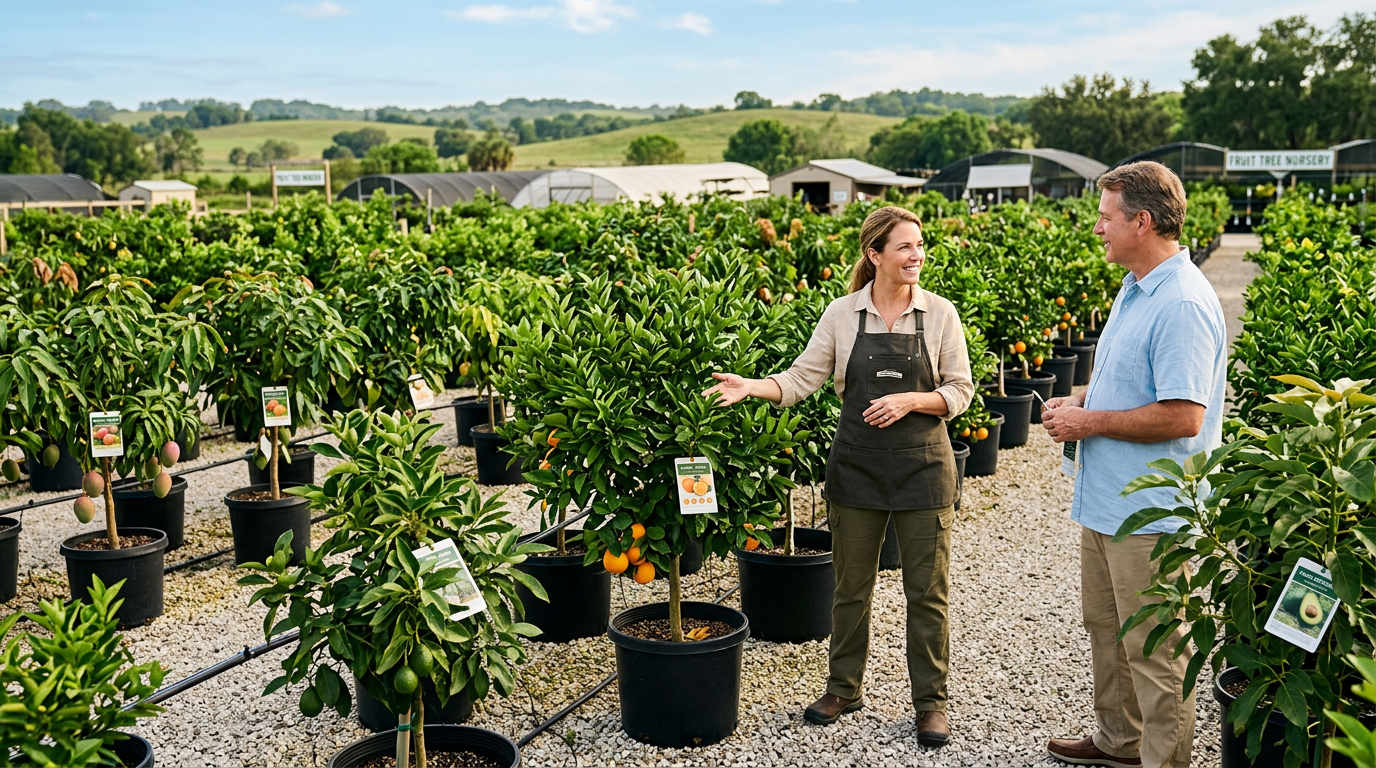
Paul’s Nursery and Fruit Trees is a family-owned fruit-tree nursery based in Clermont, Florida. According to its company information, the nursery supplies and helps plant citrus, avocado, mango, peach, banana and other fruiting plants for homeowners in Clermont, The Villages and surrounding Central Florida communities.
Its listed selection includes apples, avocados, bananas, blackberries, blueberries, cherries, figs, grapefruit, guava, kumquat, lemons, loquats, mangoes, mulberries, nectarines, olives, oranges, passion fruit, peaches, pears, plums, pomegranates, star fruit, tangelos and tangerines. Availability changes with season, sourcing and plant condition, so customers should confirm current stock directly before travelling.
A responsible nursery should help match the plant to the property rather than recommending a variety solely because it is popular. Paul’s Nursery and Fruit Trees should consider cold tolerance, mature dimensions, pollination and the customer’s willingness to prune, irrigate, fertilise and protect the plant.
Why Local Fruit-Tree Selection Matters in Central Florida
Florida does not have one uniform growing climate. Winter temperatures, soil, rainfall, wind and urban heat vary across short distances. A tropical fruit that performs in a protected South Florida yard may suffer repeated cold damage in an exposed Clermont landscape.
Temperate fruits create the opposite challenge. Peaches, apples, pears and plums may require a certain amount of winter chilling to flower and fruit properly. A high-chill variety may grow leaves in Central Florida but fail to produce a dependable crop.
Other local considerations include:
- Sandy or low-organic-matter soil
- Poorly drained pockets
- Intense summer rainfall
- Irrigation water quality
- Hurricane and thunderstorm winds
- Root-knot nematodes
- Fungal and bacterial disease pressure
- Citrus pest and disease challenges
- Homeowner-association restrictions
- Wildlife and bird pressure
Paul’s Nursery and Fruit Trees can narrow the options to plants with a reasonable chance of success in the customer’s microclimate.
9 Essential Steps With Paul’s Nursery and Fruit Trees
A productive home orchard begins before the first hole is dug. The following steps help prevent the most expensive and frustrating mistakes.
1. Define the Orchard Goal
Some homeowners want one compact citrus tree near a patio. Others want a mixed orchard that produces across several seasons. The goal determines how much space, labour and irrigation will be required.
List the fruits the household actually eats and the maintenance it can provide. A tree that produces heavily may also create fallen fruit, insects and cleanup. A plant that requires regular pruning or cold protection may not suit a low-maintenance landscape.
Paul’s Nursery and Fruit Trees should ask whether the priority is fresh eating, cooking, juice, shade, screening, container culture or a broader edible landscape. A decorative location near the front of the home may call for different growth habits from a working backyard orchard.
Start with a manageable number of trees. It is easier to add another plant than to correct severe overcrowding after several years.
2. Evaluate Sun, Drainage and Space
Most fruit trees produce best with substantial direct sunlight. A location that appears sunny in winter may be shaded by mature trees or buildings during the summer growing season.
Observe the site through the day and after heavy rain. Standing water, roof runoff and low areas can contribute to root decline. Many fruit trees need good drainage and do not tolerate prolonged saturation.
Measure available width as well as height. Mature canopies can interfere with roofs, fences, pools, power lines, septic systems and neighbouring property. Roots also need room, even though they do not grow as a mirror image of the canopy.
Paul’s Nursery and Fruit Trees should provide realistic mature-size guidance for the specific variety and rootstock. Labels describing a plant as dwarf or semi-dwarf still require interpretation; pruning and growing conditions influence final dimensions.
3. Match the Variety to the Local Climate
Fruit-tree suitability is variety-specific. Two peaches can have very different chill needs. Two mango cultivars can vary in cold sensitivity, disease response, tree size and fruit season.
Ask about:
- Minimum cold tolerance
- Chill-hour requirement
- Ripening season
- Heat and humidity adaptation
- Disease susceptibility
- Rootstock
- Mature size
- Bearing age
- Fruit quality and use
Paul’s Nursery and Fruit Trees can explain which varieties have performed reliably in similar Central Florida properties. No nursery can guarantee a crop because weather, pollination, care and disease influence results, but locally informed selection reduces avoidable risk.
Avoid choosing solely from fruit photos. Flavour matters, but the tree must first survive and flower under local conditions.
4. Understand Pollination Requirements
Some fruit trees are self-fruitful and can produce with one plant, although another compatible variety may improve yield. Others require cross-pollination between compatible cultivars flowering at the same time.
Avocados have flower types that can influence cross-pollination planning, although fruit set is affected by many factors. Blueberries may perform better with multiple compatible cultivars. Certain apples, pears, plums and other fruits can have specific pollination needs.
Paul’s Nursery and Fruit Trees should tell customers whether one tree is sufficient and which companion variety is compatible. Simply buying two trees of the same cultivar may not provide cross-pollination.
Pollinators also need suitable habitat. Avoid unnecessary insecticide use during bloom, and follow all labels carefully. Bee activity, weather and flowering overlap influence fruit set.
5. Inspect Tree Health Before Purchase
A good nursery tree should have healthy foliage appropriate for the season, a sound trunk, suitable branching and a root system that has not become severely compromised in the container.
Look for:
- Major trunk wounds
- Circling or exposed roots
- Severe canopy imbalance
- Active pests
- Unusual leaf spotting or distortion
- Graft damage
- Loose root balls
- Standing water in the container
- Deep planting that buries the trunk flare
Some cosmetic leaf damage is normal and does not necessarily indicate poor health. Conversely, very dark green growth produced by excessive fertilisation is not proof of superior quality.
Paul’s Nursery and Fruit Trees should identify the cultivar and rootstock where relevant. Keep the plant tag and purchase records. Accurate identity is important for pollination, pruning and harvest expectations.
6. Plant at the Correct Depth
Planting too deeply is a common cause of long-term decline. The top of the root ball and trunk flare should generally remain at or slightly above surrounding grade, with adjustments for site drainage and professional guidance.
The hole should be wide enough to accommodate roots without forcing them into a narrow cylinder. Backfill practices depend on soil and plant needs, but creating a heavily amended pocket can sometimes discourage roots from expanding into native soil.
Remove or manage container materials as appropriate. Circling roots may require correction before planting. Handle the tree by the root ball, not by lifting the trunk.
Paul’s Nursery and Fruit Trees offers planting support according to its company information. Customers should ask whether delivery, excavation, soil preparation, staking, mulch and initial irrigation are included.
7. Establish a Smart Watering Routine
Newly planted trees need consistent moisture while roots establish, but excessive watering can deprive roots of oxygen and promote disease. A fixed daily schedule may be inappropriate after establishment or during rainy periods.
Apply water to the root zone rather than repeatedly wetting the trunk. Check soil moisture below the surface instead of judging only by dry topsoil. Sandy soil may drain quickly, while a compacted or low area can stay wet.
Paul’s Nursery and Fruit Trees should provide establishment guidance suited to plant size, season and site. Homeowners should also account for local irrigation restrictions and rainfall.
Wilting does not always mean drought. Root damage and waterlogging can produce similar symptoms. Investigate soil moisture before adding more water.
8. Mulch and Fertilise Correctly
Mulch helps moderate soil temperature, reduce weeds and conserve moisture. It should be spread over the root area while remaining away from direct contact with the trunk.
Piling mulch against bark can retain moisture, conceal damage and encourage root growth in the wrong location. A shallow, broad layer is generally more useful than a high mound.
Fertiliser needs depend on tree type, age, soil and local recommendations. Applying too much can burn roots, produce weak growth or increase nutrient runoff. Newly planted trees may not need immediate heavy fertilisation.
Paul’s Nursery and Fruit Trees should explain a suitable programme without promising that one product fits every species. Citrus, blueberries, bananas and peaches can have different nutrient and soil-pH needs.
9. Plan for Pruning, Pests and Weather
Fruit trees require ongoing observation. Pruning can manage size, remove damaged wood, improve light penetration and support productive structure. Timing and technique vary by species.
Topping or severe random cutting can damage the tree. Mangoes, peaches, citrus and figs respond differently, and some fruit forms on particular ages of wood.
Monitor leaves, fruit, bark and new growth for changes. Correct identification should come before treatment. Nutrient deficiencies, root stress, herbicide damage and disease can look similar.
Paul’s Nursery and Fruit Trees can provide general care guidance, while complex disease or structural concerns may require a local extension specialist, certified arborist or licensed pest professional. Prepare for storms by maintaining sound structure and for cold events by planning protection appropriate to tree size.
Paul’s Nursery and Fruit Trees Citrus Selection
Citrus remains closely associated with Florida, but home production requires informed variety and disease management. Oranges, lemons, grapefruit, kumquats, tangelos and tangerines differ in cold tolerance, fruit season and tree size.
Choosing a citrus variety
Consider fruit use, seediness, peelability, ripening period and available space. A household seeking juice oranges may make a different choice from one wanting easy-peel fresh fruit.
Rootstock matters
Rootstock can influence size, soil adaptation, cold response and disease tolerance. Customers should ask Paul’s Nursery and Fruit Trees which rootstock is used and why it suits the intended site.
Citrus health
Florida citrus faces serious pest and disease pressure. Purchase from reputable sources and avoid moving unapproved plant material. Monitor for unusual leaf patterns, decline and insect activity.
A fruit tree in a home landscape still requires appropriate care. Good nutrition and irrigation support health but do not make a tree immune to disease.
Paul’s Nursery and Fruit Trees Mango and Avocado Options
Mangoes and avocados appeal to homeowners seeking tropical fruit, but cold exposure is a central concern in Central Florida.
Mangoes
Cultivars vary in tree size, flavour, fibre, disease response and harvest season. A protected, sunny site with good drainage can improve prospects. Young trees may need cold protection during severe events.
Avocados
Avocado types differ in cold tolerance, season and flower pattern. Mature size can be substantial. Root health is highly dependent on drainage because avocados can be sensitive to wet soil.
Paul’s Nursery and Fruit Trees should help customers compare cultivars based on microclimate rather than assuming every tropical tree will perform equally throughout the region.
Cold protection becomes harder as trees grow. Select placement and cultivar with the long term in mind.
Low-Chill Peaches, Apples, Pears and Plums
Temperate fruits need sufficient winter chilling but can be harmed when a variety requires more cold than the area normally receives. Low-chill cultivars have been developed for warmer regions.
Chill requirement is only one factor. Bloom timing, pollination, disease, fruit thinning, pruning and late cold events also influence harvest.
Peaches often require annual pruning and fruit thinning for good structure and fruit size. Apples, pears and plums may require compatible pollinisers. Some varieties perform better than others under humid conditions.
Paul’s Nursery and Fruit Trees can suggest locally appropriate options, but customers should verify care expectations. These trees may demand more seasonal pruning and disease management than a casual buyer anticipates.
Berries, Vines and Smaller-Space Fruit
Not every edible landscape needs a large tree. Blueberries, blackberries, passion fruit and compact figs can suit smaller spaces when their requirements are met.
Blueberries
Blueberries generally need acidic soil and appropriate varieties. Cross-pollination between compatible cultivars may improve production. Birds can consume fruit before harvest.
Blackberries
Growth habit, thorniness and support needs vary. Pruning should account for which canes bear fruit.
Passion fruit
Passion fruit is a vigorous vine that needs strong support. It can spread beyond the intended space and may require regular pruning.
Figs
Figs can be productive but require room, sunlight and attention to drainage. Wildlife may compete for ripe fruit.
Paul’s Nursery and Fruit Trees should help customers choose plants based on support, maintenance and harvest needs rather than size at purchase.
Designing a Home Orchard With Paul’s Nursery and Fruit Trees
A home orchard should be designed for mature plants and working access.
Begin by mapping:
- Property boundaries
- Buildings and utilities
- Septic components
- Power lines
- Sun and shade
- Drainage
- Irrigation
- Existing trees
- Vehicle and equipment access
Arrange trees so larger canopies do not permanently shade smaller sun-loving plants. Leave access for pruning, harvesting, mowing and emergency work.
Staggering harvest seasons can provide fruit over a longer period and prevent one overwhelming harvest. Include polliniser pairs where needed.
Paul’s Nursery and Fruit Trees can help translate a wish list into a practical layout. A phased orchard lets homeowners learn the site before adding more plants.
Container-Grown Fruit Trees
Containers can suit patios, rentals or properties with poor soil, but they create a limited root environment. Plants dry faster, depend heavily on the grower for nutrients and may need periodic root or container management.
Choose a container with drainage and enough stability for the mature canopy. A large tree in a lightweight pot can topple in wind. Do not allow water to remain trapped in a saucer.
Dwarfing rootstock or naturally compact cultivars can help, but “dwarf” does not mean tiny. Pruning and repotting may still be necessary.
Ask Paul’s Nursery and Fruit Trees whether the selected plant is appropriate for long-term container growth and which potting medium, watering approach and container size are recommended.
Cold Protection in Clermont
Central Florida can experience cold events that damage tropical and subtropical plants. Young trees are often more vulnerable because their trunks and canopies are small.
Cold-protection planning may include:
- Choosing a protected site
- Maintaining appropriate soil moisture before a freeze
- Using suitable frost cloth
- Protecting the graft area when relevant
- Avoiding plastic directly on foliage
- Removing or venting covers when conditions warm
- Delaying pruning until damage can be assessed
Heat sources and coverings can create fire or electrical risks if used improperly. Follow reliable horticultural and safety guidance.
Paul’s Nursery and Fruit Trees should provide species-specific advice, but no protection method guarantees survival during an extreme event.
Storm Preparation for Fruit Trees
Strong wind can break poorly structured branches and uproot trees in saturated soil. Good structure begins when the tree is young.
Use correct pruning rather than removing large amounts of canopy immediately before a storm. Stakes should not remain indefinitely and must allow suitable trunk development.
After a storm, keep away from trees contacting power lines and report utility hazards. Broken branches under tension can move unpredictably.
Minor damage may be pruned cleanly, while major trunk splits or leaning require professional assessment. Paul’s Nursery and Fruit Trees can advise on routine plant care, but hazardous tree work belongs to trained arborists.
How Much Do Paul’s Nursery and Fruit Trees Cost?
Fruit-tree cost varies by species, cultivar, container size, age, availability, delivery and planting service. A larger tree costs more to purchase and transport but does not always establish faster than a smaller, healthy plant.
A written estimate should clarify:
- Plant species and cultivar
- Rootstock where relevant
- Container size
- Quantity
- Delivery
- Planting
- Soil or amendment assumptions
- Staking
- Mulch
- Irrigation responsibility
- Warranty or replacement policy
- Access limitations
- Care instructions
Compare plant health and suitability rather than size alone. A well-selected smaller tree can outperform an oversized tree with circling roots or transplant stress.
Paul’s Nursery and Fruit Trees customers should ask how availability affects substitutions. No cultivar should be changed without the buyer understanding pollination, flavour, mature size and climate implications.
Questions to Ask Paul’s Nursery and Fruit Trees
Before purchasing, ask:
- Is this exact cultivar suited to my location?
- What is its mature size?
- What rootstock is used?
- Does it need a polliniser?
- How many chill hours does it require?
- When does the fruit ripen?
- How cold tolerant is the tree?
- Is my site sunny and well drained enough?
- What watering is needed after planting?
- When should fertilising and pruning begin?
- Are delivery and planting included?
- What does the plant guarantee cover?
Paul’s Nursery and Fruit Trees should provide realistic guidance and explain which outcomes depend on weather and customer care.
Common Fruit-Tree Mistakes to Avoid
Planting too deeply
Buried trunk flares and grafts can contribute to decline. Set the root ball at an appropriate grade.
Choosing by fruit photo alone
Flavour is irrelevant if the cultivar cannot thrive or flower locally.
Ignoring pollination
A healthy tree may produce little fruit without a compatible partner.
Planting too close together
Crowded canopies compete for light and become difficult to prune and harvest.
Overwatering
Constantly wet roots can be as damaging as drought. Check soil moisture before irrigating.
Piling mulch against the trunk
Mulch volcanoes retain moisture and hide damage. Keep mulch away from bark.
Fertilising heavily at planting
Excess fertiliser can injure roots or push weak growth. Follow species-specific guidance.
Expecting immediate fruit
Trees need establishment time, and young fruit may need thinning to support structure.
Preparing for Delivery or Planting
Before Paul’s Nursery and Fruit Trees arrives:
- Confirm the cultivar and quantity.
- Mark the approved planting locations.
- Check HOA restrictions.
- Request utility locating before excavation where appropriate.
- Identify private irrigation and landscape lighting.
- Provide clear access.
- Secure pets.
- Confirm irrigation availability.
- Review mature spacing.
- Ask who removes excess soil and containers.
Do not plant directly over underground utilities, septic components or drainage infrastructure. Large-tree placement should account for future access and canopy growth.
Conclusion
Paul’s Nursery and Fruit Trees helps Clermont and Central Florida homeowners choose and establish citrus, mango, avocado, peach, berries and other productive plants. The most successful orchard begins with variety selection based on local climate, chill requirements, cold tolerance, mature size, pollination, sunlight and drainage.
Homeowners should inspect plant health, confirm cultivar identity, plant at the correct depth and establish a balanced watering routine. Mulch, fertiliser, pruning and cold protection should be adapted to the species rather than applied as one universal programme.
Before purchasing, ask Paul’s Nursery and Fruit Trees for clear information about rootstock, pollinisers, harvest season, mature dimensions, planting service and care. Thoughtful planning can turn a small nursery tree into a productive, attractive part of the landscape while avoiding years of preventable problems.
FAQs
1. What plants does Paul’s Nursery and Fruit Trees offer?
The nursery lists citrus, mango, avocado, peach, apple, pear, plum, fig, guava, berries, bananas, passion fruit and other fruiting plants.
2. Where does Paul’s Nursery and Fruit Trees provide service?
It is based in Clermont and serves The Villages and many surrounding Central Florida communities. Confirm delivery or planting availability for the address.
3. Which fruit trees grow well in Central Florida?
Suitable options can include selected citrus, low-chill peaches, figs, loquats, mulberries and protected tropical fruits. The exact cultivar and site matter.
4. Do I need two fruit trees for pollination?
It depends on the species and cultivar. Some are self-fruitful, while others require or benefit from a compatible polliniser flowering at the same time.
5. How often should a newly planted fruit tree be watered?
Frequency depends on plant size, soil, rainfall and season. Keep the root zone evenly moist during establishment without maintaining saturated conditions.
6. Does Paul’s Nursery and Fruit Trees provide planting help?
The nursery advertises fruit-tree planting support. Confirm current delivery, installation, irrigation, mulch, staking and warranty details before purchase.