
Choosing Good Neighbors Electric gives Atascadero and Central Coast homeowners access to professional help for electrical inspections, repairs, panels, wiring, lighting, EV chargers, generators and other residential power needs. Electrical systems should never be treated as a do-it-yourself experiment. Loose connections, damaged conductors, overloaded circuits, incorrect grounding and unsuitable equipment can create shock, fire or property-damage risks. This guide explains the warning signs that require attention, the services a qualified electrician can provide and the questions homeowners should ask before approving electrical work.
What Is Good Neighbors Electric?
Good Neighbors Electric is a residential electrical company serving Atascadero, California, and nearby Central Coast communities. According to its service information, the company handles electrical inspections, troubleshooting, panel work, circuit breakers, grounding, wiring, EV charging, generators, lighting, surge protection and power-related installations for home systems.
The company presents its approach around clear communication, organised worksites and practical recommendations. Those qualities are especially important in electrical service because much of the system is concealed behind walls, above ceilings or inside equipment. Homeowners need understandable explanations and written documentation to make informed decisions.
A professional electrician should evaluate the property before recommending major work. The age of the home, existing service capacity, panel condition, circuit layout, grounding, planned appliances and local requirements all influence the solution. Good Neighbors Electric should therefore develop a scope based on observed conditions rather than a generic package.
Why Professional Electrical Service Matters
A residential electrical system includes the utility service connection, meter equipment, main panel, breakers, grounding and bonding, branch circuits, outlets, switches, fixtures, alarms and permanently connected appliances. Modern homes may also include solar systems, battery storage, EV chargers, heat pumps, hot tubs, pools, generators and smart controls.
Each component must be correctly selected and coordinated. Increasing one circuit’s capacity without confirming conductor size can create a serious hazard. Replacing an outlet without understanding grounding may leave the installation unsafe. Adding a large load can exceed the capacity of a panel or service.
Good Neighbors Electric can assess the complete system, obtain permits when required, coordinate inspections and complete work using appropriate methods. Professional service does not eliminate every future electrical issue, but it reduces the risks created by unqualified modifications and incomplete diagnosis.
9 Ways Good Neighbors Electric Can Protect a Home
The most useful electrical service begins with evidence, testing and a clear scope. The following areas represent common reasons homeowners need a qualified electrician.
1. Perform a Detailed Electrical Inspection
An electrical inspection evaluates visible and accessible components for safety, condition and suitability. The scope can range from a focused check of one concern to a broader assessment before a purchase, renovation or major equipment installation.
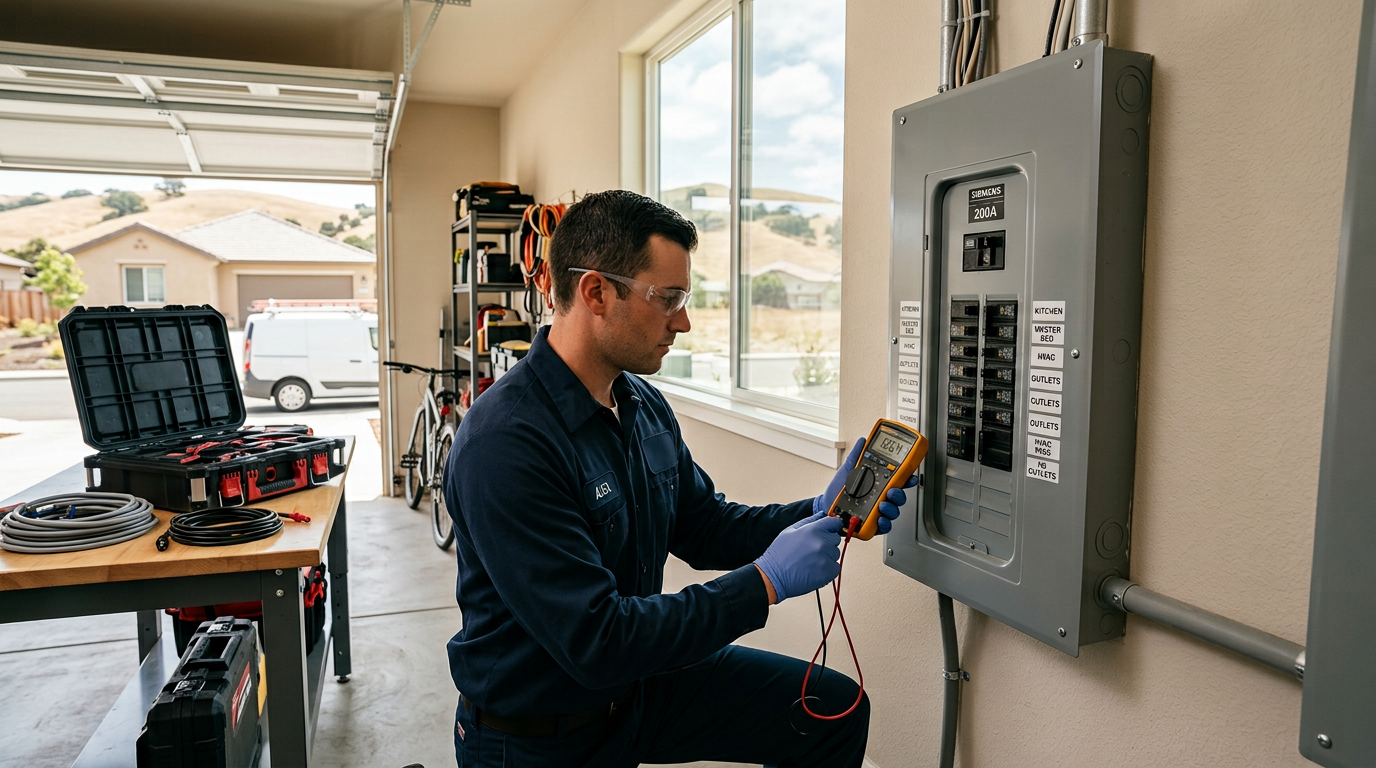
A professional may inspect the service equipment, panel, breakers, accessible wiring, grounding, bonding, outlets, GFCI and AFCI protection, switches, lighting, smoke alarms and signs of unapproved work. Thermal damage, corrosion, loose connections, damaged insulation and improper overcurrent protection deserve prompt attention.
Good Neighbors Electric should explain the limits of the inspection. Concealed wiring cannot always be fully assessed without opening finishes, and an ordinary service visit is not the same as an invasive engineering investigation.
A written report should prioritise findings. Immediate hazards, code-related corrections, reliability concerns and optional upgrades should be distinguished rather than presented as one undifferentiated list.
2. Diagnose Flickering Lights and Power Loss
Lights may flicker for reasons ranging from a loose lamp to a serious service connection issue. Repeated dimming when appliances start, power loss in several rooms, buzzing, warm devices or intermittent operation should not be ignored.
The electrician may evaluate circuit loading, neutral connections, breakers, switches, fixtures, voltage and service conditions. Some problems occur on the utility side and require coordination with the power provider.
Good Neighbors Electric can trace the symptoms and determine whether the problem is local to one fixture, affects a branch circuit or involves the main service. Homeowners should note when the issue occurs and which appliances are operating, but they should not remove panel covers or touch exposed conductors.
If lights suddenly become unusually bright in some areas and dim in others, or if multiple rooms behave abnormally, turn off sensitive equipment when it is safe to do so and seek urgent professional help.
3. Repair or Upgrade Electrical Panels
The electrical panel distributes power through breakers that protect branch circuits from excessive current. Panels can require repair because of damaged breakers, corrosion, overheating, loose connections or obsolete components. An upgrade may be considered when adding major loads, renovating extensively or addressing capacity and condition concerns.
A larger panel does not automatically increase the home’s available utility service. The electrician must assess service conductors, meter equipment, grounding, load calculations and utility requirements.
Good Neighbors Electric lists panel repair, installation and service upgrades among its services. Customers should ask whether the project requires utility coordination, permits, an inspection, trenching, exterior repairs or temporary power interruption.
Panel replacement should not be sold solely on age. Condition, design, capacity, documented defects and planned demand all matter. Conversely, visible burning, melting, water intrusion or repeated breaker failure needs prompt evaluation.
4. Install and Repair Circuit Breakers
A circuit breaker is a protective device, not a convenient on-and-off switch for a recurring fault. If a breaker trips repeatedly, there may be an overload, short circuit, ground fault, damaged appliance or wiring problem.
Do not repeatedly reset a breaker without understanding why it trips. Never substitute a higher-rated breaker to stop nuisance tripping. The wire and connected equipment may not be designed for the increased current.
Good Neighbors Electric can inspect the circuit, test loads and determine whether the breaker is faulty or operating correctly in response to another problem. Replacement breakers must be compatible with the panel and installed according to the equipment requirements.
Some circuits require arc-fault or ground-fault protection depending on the location, work scope and applicable rules. A qualified electrician can explain where these devices apply.
5. Improve Grounding, Bonding and Surge Protection
Grounding and bonding perform related but distinct safety functions. Bonding connects conductive parts to create an effective fault-current path, while grounding connects parts of the system to earth in accordance with the electrical design. Incorrect connections can leave metal components energised or create objectionable current paths.
Whole-house surge protection can help limit certain transient voltage events. It does not guarantee protection from every surge or direct lightning strike, and it works best as part of a layered strategy that includes proper grounding and point-of-use protection for sensitive electronics.
Good Neighbors Electric can evaluate service grounding, bonding, panel connections and surge-protection options. Homeowners should not attach improvised grounding wires or assume a three-prong receptacle is properly grounded simply because it accepts a grounded plug.
Sensitive equipment, home offices, entertainment systems and smart appliances can benefit from a coordinated protection plan, but no device should be marketed as absolute insurance against electrical damage.
6. Install EV Charging Equipment
Electric vehicles can add a substantial continuous load to a home. Charger installation requires assessment of service capacity, panel space, circuit routing, equipment rating, mounting location and charging needs.
The highest available charging power is not always necessary. Daily driving distance, vehicle acceptance rate, utility pricing and overnight charging time should influence the design. In some homes, load-management equipment can be considered when service capacity is limited.
Good Neighbors Electric lists EV charger installation and identifies experience with Tesla-related systems. Customers should confirm compatibility with the exact vehicle and charger, warranty requirements, permit needs, cable reach, weather exposure and future vehicle plans.
An ordinary receptacle should not be assumed suitable for prolonged high-load charging without professional evaluation. Heat, loose contacts and unsuitable wiring can create risk. Hardwired and receptacle-based installations each have specific requirements.
7. Plan Generator and Backup-Power Systems
Backup power can support essential loads during an outage, but the system must prevent unsafe backfeeding into utility lines. A generator should never be connected to household wiring through an improvised cord or unapproved arrangement.
Professional planning considers fuel, placement, exhaust clearances, noise, transfer equipment, selected loads, grounding, maintenance and carbon monoxide safety. Portable and permanently installed generators require different operating procedures.
Good Neighbors Electric offers generator installation according to its service list. The electrician should explain which circuits will receive backup power, whether the system starts automatically and how much load it can support.
Generators must operate outdoors in a location consistent with manufacturer and safety guidance. Carbon monoxide can accumulate quickly, and opening a garage door does not make indoor generator operation safe.
8. Update Wiring for Renovations and Modern Loads
Older homes may not have enough circuits or conveniently located outlets for modern appliances, home offices and electric equipment. Renovations also create an opportunity to correct unapproved work and improve the circuit layout.
New wiring should be planned around actual loads rather than simply extending the nearest circuit. Kitchens, bathrooms, garages, additions, HVAC equipment, pools and hot tubs have specific considerations.
Good Neighbors Electric lists wiring for home additions, garages, air conditioning, hot tubs, pools and general residential projects. A written plan should identify circuit locations, device types, panel changes, access openings and wall-repair responsibilities.
Rewiring can involve disruption because cables are concealed. Ask how the crew will route wiring, protect finishes and coordinate drywall repair. Opening walls may reveal conditions that could not be identified during the initial estimate.
9. Upgrade Lighting, Fans and Safety Devices
Lighting affects comfort, visibility, energy use and room function. Electrical planning should consider fixture rating, dimmer compatibility, ceiling support, switching and colour temperature.
Ceiling fans require properly rated support. A standard lighting box may not be approved for fan loads. Outdoor fixtures need appropriate weather ratings and installation methods.
Good Neighbors Electric provides interior lighting, outdoor lighting, ceiling fan and fire-alarm-related services according to its website. Customers should confirm whether fixtures are supplied by the contractor or owner and who is responsible for defective customer-supplied products.
Smoke and carbon monoxide alarms are life-safety devices. Their placement, interconnection, power source and replacement schedule should follow applicable requirements and manufacturer guidance.
Warning Signs to Call Good Neighbors Electric
Electrical symptoms can indicate an immediate hazard or a developing problem. Arrange professional service when you notice:
- Repeated breaker trips
- Flickering or dimming across multiple fixtures
- Outlets or switches that feel warm
- Buzzing, sizzling or crackling sounds
- A burning or fish-like electrical odour
- Scorch marks or discolouration
- Loose outlets or damaged cover plates
- Sparks during ordinary use
- Shocks or tingling from appliances or metal fixtures
- Dead outlets without an obvious cause
- Extension cords being used as permanent wiring
- Two-prong receptacles where grounded equipment is needed
- Water near a panel, outlet or electrical equipment
- A panel that lacks capacity for planned appliances
- Unlabelled or incorrectly labelled breakers
Turn off power only when it can be done safely. For smoke, active fire, arcing, severe shock or another immediate emergency, leave the area and contact emergency services. Do not touch a person who remains in contact with an energised source.
Good Neighbors Electric Panel Services
Panel work is among the most consequential residential electrical projects. It can involve the main service, utility conductors and high available fault current.
Panel inspection and repair
An electrician may inspect breaker fit, bus condition, conductor terminations, signs of overheating, enclosure corrosion and grounding or bonding. Repairs should use listed, compatible components.
Panel replacement
Replacement may be recommended because of condition, obsolete equipment, damage or project needs. The work can require a permit, utility disconnect and inspection before power is restored.
Service upgrades
A service upgrade may include the panel, meter equipment, conductors, grounding, utility coordination and load calculations. Good Neighbors Electric should explain whether the service rating will change and what equipment is included.
Subpanels
A subpanel can distribute circuits to an addition, garage or other area. It must be supplied, grounded and bonded correctly. A subpanel is not a substitute for adequate main-service capacity.
Good Neighbors Electric EV Charger Installation
A successful EV project begins with charging goals. A homeowner who drives a short daily distance may not need the fastest charger available. Choosing the appropriate power can reduce unnecessary electrical work while still restoring the vehicle’s daily energy use overnight.
An electrician should review:
- Existing service and calculated demand
- Panel capacity and breaker space
- Vehicle and charger specifications
- Cable route and length
- Indoor or outdoor exposure
- Wi-Fi or network needs
- Utility incentives or rate plans
- Permits and inspection
- Future vehicle or battery plans
Good Neighbors Electric can then propose a dedicated circuit, charger location and any load-management or panel work required. Customers should retain permit records and installation documentation for warranty and property records.
Good Neighbors Electric Generator Installation
Backup-power design should begin with a load list. Essential items might include refrigeration, selected lights, communications, medical equipment, a well pump or heating controls. Large air conditioners, electric water heaters and cooking equipment can significantly increase generator capacity requirements.
Good Neighbors Electric should explain the difference between selected-circuit and broader backup systems. The estimate should identify the generator, transfer equipment, electrical work, fuel responsibilities, permits, startup, testing and owner training.
Maintenance remains necessary after installation. Batteries, fuel systems, oil, filters and exercise schedules vary by model. The owner should receive manuals and know how to respond to alarms or failed starts.
Good Neighbors Electric for Solar and Battery-Ready Homes
Homes with solar generation, battery storage and smart energy controls require coordinated electrical design. These systems can change power flow and affect service equipment, backup operation and utility interconnection.
The company lists ground-mounted solar and Tesla-related installation capabilities in its service information. Customers should verify the exact certification, equipment support and scope for their proposed project.
A battery does not automatically power the entire home during an outage. Backup capability depends on system architecture, protected loads, inverter output, battery capacity and operating settings. Good Neighbors Electric should explain which circuits remain active and what equipment cannot run simultaneously.
Solar and storage projects may involve utility permission, permits, structural or civil work and manufacturer commissioning. Responsibilities should be documented before installation.
Whole-House Surge Protection
Voltage surges can originate outside or inside a property. Utility switching, nearby lightning and motors can produce transient events. A service-level surge protective device can reduce certain surge energy before it reaches branch circuits.
Good Neighbors Electric can recommend a device compatible with the panel and electrical system. Homeowners should ask about rating, replacement indicators, warranty and coordination with point-of-use protectors.
Surge protection does not correct undervoltage, sustained overvoltage, wiring faults or every lightning event. It should be one part of a broader electrical safety and equipment-protection strategy.
Electrical Work for Pools, Hot Tubs and Outdoor Areas
Water and electricity require strict separation, grounding, bonding and protective devices. Pool and hot-tub work is not suitable for casual DIY installation.
Electrical design may include dedicated circuits, GFCI protection, bonding, disconnects, equipment clearances, underground wiring and weather-resistant components. Lighting and receptacles near water also require careful placement.
Good Neighbors Electric lists pool and hot-tub wiring services. The electrician should coordinate with the pool or spa installer and confirm equipment specifications before rough-in.
Outdoor lighting, irrigation controls, gates and landscape equipment should use products rated for the environment. Ordinary indoor cords and devices deteriorate when exposed to weather.
How to Prepare for a Good Neighbors Electric Appointment
Useful information helps an electrician diagnose the problem efficiently.
Before the visit:
- Write down symptoms and when they occur.
- Identify which appliances were running.
- Note affected rooms and devices.
- Gather panel, charger, generator or equipment manuals.
- Provide access to the panel, attic, garage and relevant rooms.
- Secure pets and clear stored items safely.
- Report previous electrical work.
- Mention planned appliances or renovations.
- Do not remove panel covers or disturb wiring.
- Avoid repeatedly resetting a tripping breaker.
Photographs or videos of intermittent flickering can be useful, but never delay emergency action to record a dangerous event.
How to Evaluate a Good Neighbors Electric Estimate
Electrical estimates should be specific enough for meaningful comparison. A proposal may include diagnostics, labour, materials, permit fees, inspection, utility coordination, trenching and finish repair.
Look for:
- A clear description of the problem or project
- Included equipment and model information
- Circuit and panel changes
- Permit responsibility
- Access and wall-opening assumptions
- Drywall, stucco or landscaping exclusions
- Estimated schedule and outage duration
- Cleanup and disposal
- Warranty details
- Payment terms
- Change-order process
Good Neighbors Electric offers financing according to its company information. Financing can improve access to necessary work, but customers should review interest, fees, promotional periods, total repayment and early-payment terms before signing.
The lowest estimate may omit permits, repairs or equipment included elsewhere. Compare scope, qualifications and communication—not price alone.
Questions to Ask Good Neighbors Electric
Before approving work, ask:
- Is the company appropriately licensed and insured?
- Does this job require a permit or inspection?
- What testing supports the diagnosis?
- Are there immediate safety concerns?
- Which options are essential and which are upgrades?
- Will power be disconnected, and for how long?
- Who coordinates with the utility?
- What wall or landscape repairs are excluded?
- Which equipment brands and models are proposed?
- What warranty applies to labour and materials?
- Will the panel and circuits be labelled?
- What records will I receive at completion?
Good Neighbors Electric should be able to explain technical recommendations in plain language without dismissing reasonable questions.
Common Electrical Mistakes to Avoid
Replacing breakers with larger ones
A higher-rated breaker can allow wiring to overheat. Breaker size must match the circuit design.
Using extension cords permanently
Extension cords are temporary tools, not substitutes for fixed wiring. Damaged or overloaded cords can create hazards.
Installing ungrounded three-prong outlets
A three-slot receptacle does not create grounding by itself. Approved alternatives must be selected for the actual wiring.
Ignoring warm devices
Warmth, discolouration or odour at outlets, switches and panels requires evaluation.
Covering electrical boxes
Junction boxes generally must remain accessible. Concealing them behind drywall can obstruct inspection and repair.
Connecting a generator without transfer equipment
Improvised connections can backfeed the utility and endanger workers and neighbours.
Adding major loads without calculations
EV chargers, hot tubs, HVAC and electric appliances can exceed service capacity when not evaluated together.
Hiring unqualified workers
Electrical work can appear functional while containing concealed hazards. Verify qualifications and permit requirements.
Maintaining a Safer Electrical System
Homeowners should keep panel access clear, use cords and devices as rated, test GFCI devices according to manufacturer guidance and replace damaged equipment. Smoke and carbon monoxide alarms should be maintained and replaced as directed.
Label circuits accurately after professional verification. Store electrical records, permits, equipment manuals and warranties together. When buying a home, ask about previous panel, solar, generator, EV charger and rewiring projects.
Schedule an inspection when a property has known unpermitted work, recurring faults, major additions or substantial new loads. Good Neighbors Electric can help identify priorities, but homeowners should continue to report changes rather than waiting for a complete failure.
Conclusion
Good Neighbors Electric provides Atascadero and Central Coast homeowners with services for inspections, repairs, panels, breakers, grounding, wiring, EV chargers, generators, lighting, surge protection and other residential electrical needs. The value of professional service lies in safe diagnosis, compatible equipment, code-aware installation and clear documentation.
Homeowners should respond promptly to burning odours, repeated breaker trips, flickering across multiple rooms, warm devices, shocks, buzzing and visible damage. They should never increase breaker size, improvise generator connections or open energised equipment.
Before hiring, ask Good Neighbors Electric for a written scope explaining testing, permits, equipment, access, outage time, exclusions and warranties. Clear communication and qualified workmanship help protect the home today while preparing its electrical system for future appliances, transportation and backup-power demands.
FAQs
1. What services does Good Neighbors Electric provide?
The company lists inspections, repairs, panels, breakers, wiring, grounding, EV chargers, generators, lighting, surge protection and other residential electrical services.
2. Where does Good Neighbors Electric operate?
Good Neighbors Electric serves Atascadero, California, and surrounding Central Coast communities. Confirm service availability for the specific address when scheduling.
3. When should I call an electrician urgently?
Seek prompt help for burning odours, sparks, shocks, hot devices, repeated breaker trips, buzzing, power abnormalities or water near electrical equipment.
4. Can Good Neighbors Electric install an EV charger?
EV charger installation is among the company’s listed services. The electrician should assess service capacity, panel space, equipment specifications and permit needs.
5. Does a tripping breaker need replacement?
Not always. The breaker may be responding correctly to an overload or fault. A qualified electrician should diagnose the circuit before replacing any component.
6. Does Good Neighbors Electric offer financing?
The company advertises financing availability. Review the current interest rate, fees, promotional terms and total repayment before accepting an agreement.