
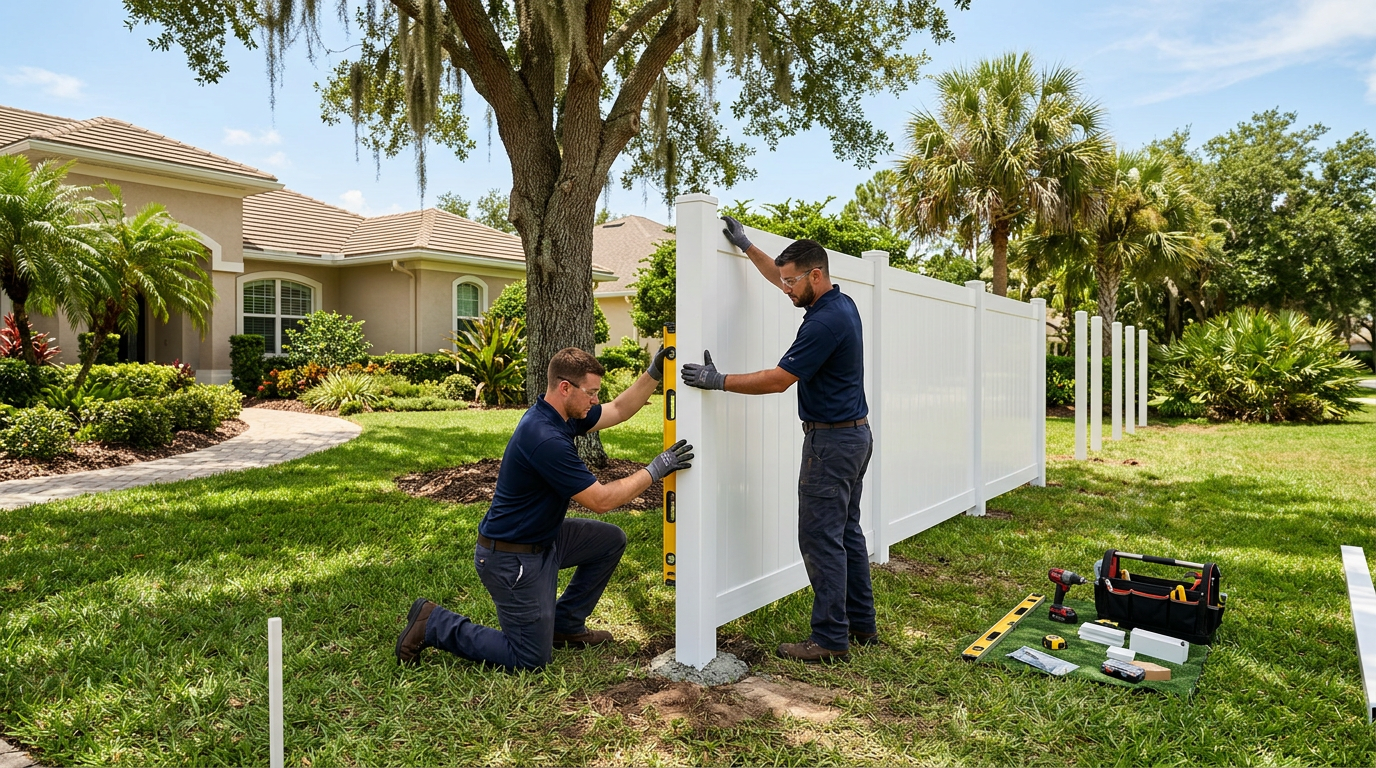
Choosing Fence Pros can help Winter Garden property owners plan a fence that supports privacy, security, curb appeal and everyday use while accounting for Florida weather. A successful installation requires more than selecting a material and marking a rough line across the yard. Property boundaries, underground utilities, permits, homeowner-association rules, drainage, wind exposure, gate placement and soil conditions can all affect the project. This guide explains how professional fence installation works, how common materials compare, which planning mistakes to avoid and what customers should confirm before approving an estimate.
What Is Fence Pros?
Fence Pros is a fencing contractor based in Winter Garden, Florida, serving residential and commercial properties in surrounding Orlando-area communities. According to its service information, the company installs, replaces and repairs wood, vinyl, aluminum and chain-link fences. It also handles custom fence requirements and gates based on the site and customer’s goals.
The company emphasises strong construction, clean work and materials suited to local conditions. Those priorities matter because fences in Central Florida face intense sun, humidity, heavy rain, wind, landscape growth, insects and repeated ground saturation.
Every property requires an individual assessment. A decorative aluminum fence around a pool has different requirements from a tall privacy fence along a rear boundary. Fence Pros should inspect access, grade, drainage, existing structures, vegetation and likely utility conflicts before finalising the scope.
Why Professional Fence Planning Matters
A fence is a structural site improvement. It must remain aligned, support gates, resist routine loads and avoid creating drainage or neighbour disputes. Even a visually simple project may involve survey documents, utility locating, community approvals and municipal requirements.
Professional planning can help address:
- Legal property boundaries
- Easements and rights of way
- Underground utilities and irrigation
- Permit and zoning requirements
- Homeowner-association design rules
- Pool-barrier requirements
- Fence height and visibility
- Soil and drainage conditions
- Gate size and access
- Wind exposure
- Material maintenance
- Removal of an existing fence
Fence Pros can coordinate the installation scope, but property owners remain responsible for understanding deeds, surveys, association obligations and other documents unless the contract assigns those tasks specifically.
9 Ways Fence Pros Can Improve a Fence Project
The following stages show what a careful fence contractor should address from initial consultation through final walkthrough.
1. Clarify the Purpose of the Fence
The right design begins with the reason for building. Privacy, pet containment, pool safety, boundary definition, security and decorative landscaping each call for different materials and layouts.
A solid privacy fence can reduce direct views but may also influence airflow and wind loading. An open aluminum design preserves visibility and suits many pool or landscape applications but does not provide visual screening. Chain link offers practical enclosure, while wood provides a traditional appearance with ongoing maintenance needs.
Fence Pros should ask how the property is used. A household with a small dog may need different spacing and ground clearance from a family securing a large yard. A commercial property may prioritise vehicle access, equipment storage and controlled gates.
Defining the main objective prevents customers from paying for features that do not solve the actual problem.
2. Confirm Property Lines and Easements
A fence installed in the wrong location can lead to expensive removal, legal conflict or loss of access. Existing mowing patterns, old fence lines and neighbour assumptions are not reliable substitutes for boundary information.
Property owners should locate a current survey and review easements, setbacks and recorded restrictions. If boundary markers are missing or uncertain, a licensed survey professional may be needed.
Fence Pros can use the approved layout for estimating and installation, but the contract should state who is responsible for determining legal boundaries. Contractors generally should not be expected to provide surveying services unless qualified and specifically retained for that purpose.
Discuss the project with affected neighbours when appropriate. Communication does not replace formal approval, but it can reduce misunderstandings about access, shared lines, appearance and removal of an old fence.
3. Review Permits and HOA Requirements
Local rules can regulate fence height, placement, materials, visibility near streets, pool barriers and construction methods. Planned communities may have additional restrictions involving style, colour, finished side and application procedures.
Approval should be obtained before ordering non-returnable materials or beginning installation. A verbal statement from a neighbour or property manager may not satisfy written association requirements.
Fence Pros customers should confirm who submits permit documents, who pays fees and how inspection corrections are handled. The contractor should build to the approved plan, while the owner should provide association decisions and property documents as required.
Rules can change and vary by address. Online summaries are useful for early planning but should not replace current confirmation from the relevant authority.
4. Locate Underground Utilities
Fence posts require excavation, which can conflict with electric, gas, communications, water, sewer, irrigation and other buried systems. Utility locating is an essential safety step before digging.
Public locating services may mark participating utility lines up to the service point, but they may not identify private lines such as irrigation, landscape lighting, pool equipment, detached-building power or owner-installed piping.
Tell Fence Pros about known private systems and provide plans when available. A private locator may be appropriate for complex properties. Marking does not guarantee that every buried item is identified, so excavation methods should still account for site conditions.
Never move or remove utility markings before work is complete. If an unknown line is exposed, work should stop until it is identified.
5. Select Material for Florida Conditions
Material choice affects appearance, maintenance, wind behaviour, privacy and cost. Fence Pros offers several common options, each with distinct strengths.
Wood provides natural character and flexible design. It can be stained or painted but may warp, split, decay or attract wood-destroying organisms when neglected. Vinyl resists rot and does not require painting, though impacts, heat movement and improper installation can affect it. Aluminum offers a clean, open design with corrosion-resistant finishes, while chain link provides practical enclosure and visibility.
No material is maintenance-free in every condition. Hardware, gates, posts and fasteners still require inspection. Landscaping, salt exposure, irrigation and storm debris can affect even low-maintenance fencing.
Fence Pros should explain product grade, post dimensions, spacing, rails, fasteners, finish and warranty rather than relying only on a broad material category.
6. Design Strong Posts and Foundations
Posts carry fence loads into the ground. Their spacing, depth, size, material and setting method influence alignment and stability. Gate posts experience additional forces and may require stronger construction.
Soil conditions can vary across a property. Saturated areas, fill, roots and drainage channels may affect excavation and support. Concrete use and curing should match the fence system and site requirements.
Fence Pros should account for panel height, openness, wind exposure and manufacturer guidance. A solid fence receives more wind pressure than an open design. Simply copying the post spacing from an old failed fence may repeat the same problem.
Customers should ask how post installation changes near retaining walls, pavers, tree roots, slopes and utility areas. Special conditions may require revised details or another qualified contractor.
7. Plan Gates Around Real Access Needs
A fence is only as convenient as its gates. Narrow openings can restrict lawn equipment, bins and deliveries. Oversized gates can sag if posts and hardware are not designed for the span.
Before installation, measure the widest equipment that must pass through. Consider mowers, trailers, wheelbarrows, pool service, emergency access and future construction. Double gates may offer vehicle access but need secure latching and suitable ground conditions.
Fence Pros should discuss gate swing direction, hinges, latch height, clearance, slope and self-closing requirements where applicable. A gate opening onto a steep grade may drag or require design changes.
Pool gates and other safety-critical openings must meet current applicable requirements. Customers should not assume a standard yard gate is automatically suitable for a pool barrier.
8. Protect Drainage and Landscaping
A new fence should not unintentionally trap runoff or redirect water toward buildings. Solid lower sections, grade changes and accumulated debris can influence drainage.
The contractor should observe swales, drains, downspouts, irrigation and low areas. Fence Pros may need to adjust ground clearance or coordinate with a drainage professional when the route crosses a significant water path.
Vegetation also matters. Trees and large roots can conflict with posts, while shrubs against a fence restrict maintenance and retain moisture. Cutting major roots can harm a tree or affect stability, so an arborist may be needed.
Discuss which plants will be trimmed or removed and who is responsible. Protect irrigation heads and identify buried lines before excavation.
9. Complete a Final Inspection and Maintenance Plan
After installation, the customer should walk the fence line with the contractor. Review alignment, post stability, panel condition, fasteners, gates, latches, cleanup and the agreed layout.
Fence Pros should explain how long concrete, coatings or sealants need before normal use. Gates may require adjustment after materials settle or wood changes with moisture.
Retain the proposal, permit records, warranty, product details and colour information. Photograph the completed fence before landscaping grows around it. This documentation can help with future repair or insurance questions.
A maintenance plan should match the material. Wood may need periodic cleaning and refinishing. Vinyl benefits from gentle washing. Aluminum and chain link should be inspected for coating damage, loose hardware and impact.
Fence Pros Wood Fence Installation
Wood remains popular because it offers privacy, customisation and a natural appearance. Common layouts include vertical privacy boards, spaced pickets, horizontal designs and decorative tops.
Benefits of wood fencing
Wood can be cut and adapted to changes in grade. It accepts stain or paint and can be repaired in sections. Individual boards are often replaceable after damage.
Wood fence considerations
Moisture, ultraviolet exposure, insects and vegetation can shorten service life. Boards may shrink, warp or split as they weather. Fastener selection and ground clearance matter.
Fence Pros should explain the wood species or treatment, board thickness, post material, rails, fasteners and expected finish. “Wood fence” alone is not a complete specification.
Staining and sealing
New wood may need to dry before receiving a finish. Timing varies with material, weather and product requirements. A suitable coating can improve appearance and moisture resistance, but it must be maintained.
Fence Pros Vinyl Fence Installation
Vinyl fencing offers a consistent appearance and does not require painting. Privacy panels, pickets and semi-private designs are available.
Benefits of vinyl fencing
Vinyl does not rot like wood and can be cleaned with a gentle method. Its uniform colour and smooth surfaces appeal to homeowners seeking lower routine maintenance.
Vinyl fence considerations
Panel systems rely on correct post spacing, secure rails and appropriate movement allowances. Impact can crack components, and heat can cause expansion. Product quality and internal reinforcement vary.
Fence Pros should identify the manufacturer, panel dimensions, post structure, gate construction and warranty. Customers should ask how repairs are handled if a matching component becomes unavailable.
Solid vinyl panels can receive substantial wind loads. Installation must follow the approved design and manufacturer requirements.
Fence Pros Aluminum Fence Installation
Aluminum fencing provides an open, decorative appearance. It is often used around landscapes, front yards and pools where approved.
Benefits of aluminum fencing
Factory-applied finishes can provide good corrosion resistance with limited maintenance. The open design allows light and views while defining the space.
Aluminum fence considerations
It does not provide full privacy and may not suit properties requiring visual screening. Grade changes, rail spacing and gate hardware affect appearance and function.
Fence Pros should verify whether the selected design is appropriate for a pool or other regulated application. Product height and spacing must match current site-specific requirements.
Inspect coatings after installation. Scratches or impact damage should be addressed according to manufacturer guidance.
Fence Pros Chain-Link Fence Installation
Chain-link fencing is practical for residential, commercial and utility applications. It provides containment and visibility with relatively low material bulk.
Benefits of chain link
Chain link can enclose large areas efficiently. Galvanised or coated options are available, and privacy slats can provide partial screening in some systems.
Chain-link considerations
Fabric gauge, mesh size, post diameter, top rail, tension wire and coating affect performance. A basic description does not reveal these specifications.
Fence Pros customers should ask whether the scope includes gates, bottom tension, privacy features and removal of existing materials. Chain link still needs correctly set posts and tensioned fabric to remain neat.
Fence Repair or Full Replacement?
Repair may be economical when damage is limited to a few boards, one gate, a short section or isolated hardware. Replacement may offer better value when posts have failed throughout, the material is widely deteriorated, the layout no longer meets needs or matching components are unavailable.
Fence Pros should inspect the complete run before recommending a solution. Replacing surface panels on weak posts can postpone rather than solve failure. Conversely, one damaged section does not always justify removing a sound fence.
Ask for separate repair and replacement options when both are reasonable. Compare expected service life, appearance, warranty and future maintenance rather than price alone.
Storm damage should be documented before cleanup when insurance may be involved. Avoid leaning or unstable sections and keep children and pets away until the area is safe.
Fence Pros for Pool Fencing
Pool barriers are life-safety systems. Height, openings, climbability, gates, latches and the relationship to doors or other structures can be regulated.
A decorative fence is not automatically a compliant pool barrier. Fence Pros should confirm the selected product and layout against current requirements for the specific property and permit.
Self-closing and self-latching gates need regular testing after installation. Soil movement, hinge wear and latch misalignment can affect operation. Never prop a pool gate open or disable its closing mechanism.
Landscaping, furniture and equipment should not create climbing opportunities near the barrier. Pool safety also requires active supervision and additional protective measures; a fence alone cannot prevent every incident.
Fence Pros for Commercial Properties
Commercial fencing may support access control, equipment security, property definition or public safety. Gate traffic, delivery vehicles, emergency access and business hours influence design.
The proposal should define materials, post and fabric specifications, gate hardware, locks, automation interfaces, bollards where required and restoration of disturbed surfaces. Automated gates involve electrical, safety and access-control considerations beyond ordinary manual gates.
Fence Pros should coordinate the schedule to reduce operational disruption. Commercial clients may require insurance documents, permits, safety plans and staged work.
Warehouses, schools, multifamily properties and utility sites can have specialised needs. The contractor should clearly identify whether the proposed system meets those project requirements.
How Much Does Fence Pros Cost?
Fence pricing depends on total length, height, material, grade, access, removal, gates, post requirements, permits and site conditions. Cost per linear foot can be a useful starting point but may not include the factors that make one property more complex.
A detailed Fence Pros estimate should identify:
- Fence type and total length
- Height and style
- Product or material grade
- Post size and spacing
- Rails, boards, panels or fabric
- Fasteners and hardware
- Number and width of gates
- Removal and disposal
- Permit responsibility
- Utility and private-line assumptions
- Landscaping and irrigation exclusions
- Surface restoration
- Schedule
- Payment terms
- Warranty
Compare complete scopes. A lower estimate may use thinner materials, wider post spacing or fewer included services. A higher price is not proof of quality, but transparent specifications make proposals easier to evaluate.
Questions to Ask Fence Pros
Before approving a project, ask:
- Is the company appropriately licensed and insured for the work?
- Who confirms property boundaries?
- Who obtains permits and HOA approval?
- How will utilities and private lines be located?
- What exact materials and dimensions are included?
- How deep and far apart will posts be?
- What gate hardware will be used?
- How will grade and drainage be handled?
- Is old fence removal included?
- Who repairs irrigation or landscaping damage?
- What warranty covers labour and materials?
- How are unexpected conditions priced?
Fence Pros should provide property-specific answers and document important assumptions in the proposal.
Common Fence Installation Mistakes
Using an old fence line as a boundary
An existing fence may not follow the legal property line. Review a current survey.
Ordering materials before approval
HOA or permit rejection can create delays and restocking costs. Obtain required approvals first.
Ignoring private utilities
Public markings may not include irrigation, pool lines or private electrical systems.
Choosing material by appearance alone
Maintenance, wind exposure, privacy, pets and gate use all matter.
Undersizing gate posts
Gates place additional load on posts and hardware. Design should reflect the opening width and weight.
Blocking drainage
A poorly planned fence can trap debris or alter runoff. Preserve important drainage paths.
Planting too close
Dense plants can retain moisture, push against panels and make maintenance difficult.
Skipping maintenance
Even low-maintenance materials need inspection, cleaning and hardware adjustment.
Preparing for Fence Pros Installation
Before work begins:
- Provide the survey and approved layout.
- Obtain HOA decisions in writing.
- Confirm permit responsibility.
- Mark known irrigation and private utilities.
- Remove personal items from the work zone.
- Secure pets and plan temporary containment.
- Discuss neighbour-side access.
- Identify trees or plants to protect.
- Confirm gate widths and swing direction.
- Arrange vehicle access for materials.
- Review the payment and change-order process.
Do not remove utility markings or make last-minute layout changes without written agreement. Small shifts can affect boundaries, easements and material quantities.
Maintaining a Fence in Central Florida
Inspect the fence after strong storms and at least periodically throughout the year. Look for leaning posts, loose panels, damaged boards, corroded hardware, gate misalignment and vegetation pressure.
Clean materials using methods approved by the manufacturer. Excessive pressure can damage wood fibres, vinyl surfaces and coatings. Avoid placing soil, mulch or constantly wet vegetation against materials not designed for ground contact.
Wood finishes need periodic renewal based on exposure and product condition. Vinyl should be checked for cracks and movement. Aluminum coatings should be inspected after impacts. Chain-link fabric and tension components should remain secure.
Contact Fence Pros when damage affects stability, gates, pool safety or a large section. Early repair can prevent a local issue from spreading.
Conclusion
Fence Pros provides Winter Garden and Orlando-area property owners with installation, replacement and repair options for wood, vinyl, aluminum and chain-link fences. The best results begin with a clear purpose, verified boundaries, current approvals, utility locating and a material suited to the property’s exposure and maintenance expectations.
Customers should request a written proposal that identifies dimensions, product grade, post design, gates, removal, permits, exclusions and warranties. They should also discuss drainage, vegetation, pool safety and private utilities before excavation begins.
A properly planned fence can improve privacy, access and appearance while reducing the risk of boundary disputes, weak gates and premature failure. By combining informed decisions with professional installation, Fence Pros can help homeowners and businesses build fencing that performs reliably in Central Florida conditions.
FAQs
1. What fence materials does Fence Pros install?
Fence Pros lists wood, vinyl, aluminum and chain-link fence installation, along with repair, replacement, gates and custom project options.
2. Where does Fence Pros provide service?
The company is based in Winter Garden and serves surrounding Orlando-area communities. Confirm availability for the specific property before scheduling.
3. Does a new fence require a permit?
Permit requirements vary by address, design and project type. Confirm current rules with the relevant authority and state responsibility in the contract.
4. Should I get a survey before fence installation?
A current survey is important when boundary location is uncertain. A licensed surveyor may be needed if markers or documents are missing or disputed.
5. Which fence material is best for Florida weather?
There is no universal winner. Vinyl, aluminum, wood and chain link offer different balances of privacy, maintenance, appearance, wind response and cost.
6. Can Fence Pros repair an existing fence?
Fence repair is among the company’s listed services. A site inspection can determine whether isolated repair or full replacement offers better long-term value.