
Choosing Venture Painting can help Plano-area property owners approach interior and exterior updates with professional preparation, organised project management and a clear finish plan. A successful paint job involves more than selecting an attractive colour and applying a new coat. Surface condition, repairs, product compatibility, weather, application technique and curing all affect the final appearance and service life. This guide explains how professional painting works, which services may be included, what homeowners should ask before approving an estimate and how to avoid common mistakes that lead to peeling, uneven colour or unnecessary expense.
What Is Venture Painting?
Venture Painting is a professional painting company serving Plano, Texas, and nearby communities in the Dallas–Fort Worth area. According to its service information, the company provides interior painting, exterior painting, cabinet refinishing, drywall repair, fence staining and commercial painting.
The company emphasises detailed preparation, clear communication and clean project execution. Those priorities matter because many premature coating failures can be traced to contamination, moisture, damaged surfaces, unsuitable primers or rushed application rather than the finish paint itself.
Every property is different. A recently built interior with sound drywall requires a different process from a weathered exterior with failed caulk and exposed wood. Venture Painting should therefore evaluate the actual surfaces, desired finish and property conditions before defining the scope.
Why Professional Painting Requires More Than a Brush and Roller
Paint is a protective coating as well as a decorative finish. On an interior wall, it influences cleanability, sheen, light reflection and visual consistency. On an exterior, it helps shield suitable substrates from sun, moisture and weathering when the system is properly prepared and maintained.
A durable project depends on several connected decisions:
- Identifying the substrate and existing coating
- Finding moisture, adhesion or structural concerns
- Cleaning and preparing the surface correctly
- Completing appropriate repairs
- Selecting compatible primer and paint
- Applying material at the required spread rate
- Allowing suitable drying and curing conditions
- Protecting adjoining finishes and occupied areas
- Inspecting the work under consistent lighting
Venture Painting can coordinate these details so the result is not dependent on guesswork. Professional service is especially valuable for high walls, extensive exteriors, detailed trim, cabinets, occupied homes and projects with a firm completion deadline.
9 Ways Venture Painting Can Improve Project Results
A reliable painting process should be transparent from the initial estimate through the final walkthrough. The following stages show what property owners should expect and why each one matters.
1. Conduct a Detailed Site Evaluation
A useful estimate begins with an inspection. The painter should identify which rooms, walls, ceilings, doors, trim, cabinets, siding, fascia, fences or other surfaces are included. Access, height, furniture, landscaping and occupancy can affect labour and scheduling.
The evaluation should also look for peeling paint, cracks, nail pops, failed caulk, stains, water damage, chalking, mildew-like growth, rotten material and previous repairs. Painting over unresolved defects may hide them temporarily without correcting the cause.
Venture Painting should distinguish cosmetic preparation from work requiring another trade. Persistent water intrusion may need a roofer, plumber or building specialist. Rotten wood can require carpentry. Suspected hazardous materials may call for licensed testing or abatement.
A clear inspection reduces change orders because the contractor and customer begin with the same understanding of surface condition.
2. Define a Written Scope of Work
A painting proposal should explain exactly what is included. Room names and exterior elevations are more useful than a vague reference to “the house.” The scope should identify surfaces, colours, sheen, repairs, primer, number of finish coats or coverage standard, product line, protection, cleanup and exclusions.
Ask whether closets, ceilings, doors, frames, baseboards, crown moulding, built-ins, garage walls, porch ceilings and detached structures are included. Small assumptions can create significant price differences.
Venture Painting customers should also confirm who moves furniture, removes wall hangings, disconnects electronics and reinstalls hardware. The estimate should state how unexpected damage is handled and whether additional work requires written approval.
A detailed scope protects both parties. The owner can compare proposals fairly, and the crew has a practical project plan.
3. Complete Thorough Surface Preparation
Preparation is often the most labour-intensive part of professional painting. Its purpose is to create a clean, stable and properly profiled surface to which the new coating can adhere.
Interior preparation may include dust removal, gentle cleaning, filling nail holes, repairing minor drywall damage, sanding rough patches, caulking selected gaps and spot priming. Exterior preparation can include washing, scraping loose coating, sanding edges, removing failed caulk, priming bare areas and protecting landscaping.
Venture Painting should adapt preparation to the material. Drywall, wood, fibre cement, masonry, metal and previously coated cabinets have different needs. Aggressive sanding or pressure washing can damage a surface when performed incorrectly.
Preparation cannot make a failing substrate sound. If siding is deteriorated, a cabinet coating is delaminating or drywall remains wet, repair or replacement may be necessary before painting.
4. Repair Drywall and Minor Surface Damage
Dents, holes, popped fasteners and failed tape joints can remain visible after painting, particularly under side lighting or higher-sheen finishes. Repair quality affects how smooth and consistent a room appears.
Minor drywall work may involve patching, applying joint compound in controlled layers, sanding and priming. Larger damage, repeated cracks or water-affected material may require more extensive evaluation.
Venture Painting offers drywall repair as part of its listed services. Customers should ask whether the repair includes texture matching and what level of visual uniformity is realistic. Heavily textured walls can be difficult to match invisibly, especially in prominent lighting.
Stains should be investigated rather than merely covered. A suitable stain-blocking primer may control residual discolouration, but active moisture must be corrected first.
5. Select the Right Primer and Paint
The best product is the one suited to the surface, environment and performance goal. Interior kitchens, bathrooms, bedrooms, trim and cabinets do not necessarily require the same coating. Exterior products must match the substrate and weather exposure.
Primer may be needed for bare drywall, exposed wood, difficult stains, glossy surfaces, patched areas, tannin-prone materials or major colour changes. Some repaint projects do not require a full primer coat when the existing finish is sound and compatible.
Venture Painting should explain the proposed product line and why it suits the project. Customers should understand colour, sheen and maintenance implications. Flat finishes can reduce the appearance of minor wall imperfections but may be less washable than some higher-sheen products. Glossy coatings are easier to clean in many applications but can highlight surface defects.
Product names alone do not guarantee results. Correct preparation, film thickness, temperature, humidity and drying time remain important.
6. Protect Floors, Furniture and Landscaping
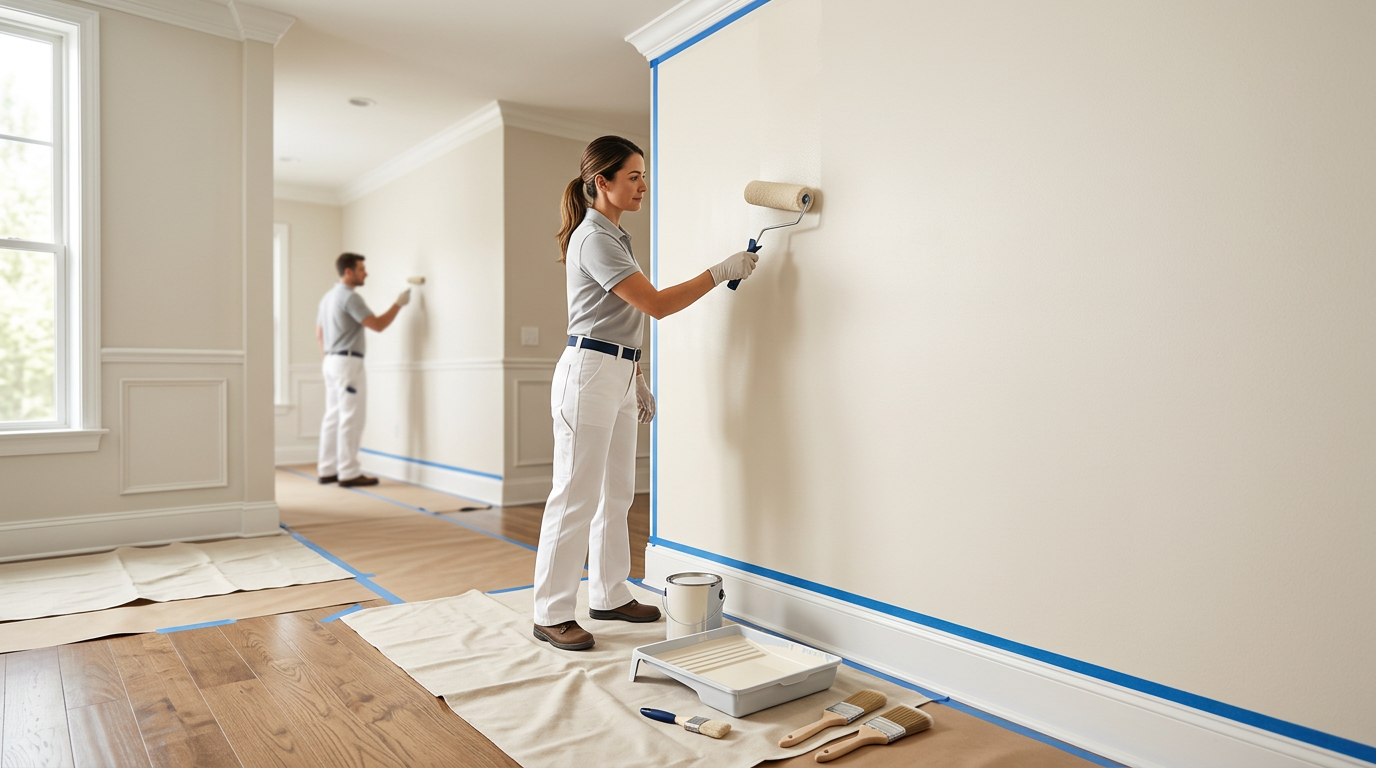
A professional crew should prevent paint from reaching surfaces outside the scope. Interior protection may include drop cloths, masking, plastic containment, floor coverings and careful removal of switch plates or hardware.
Exterior protection can involve covering windows, roofs, paving, plants, lighting, air-conditioning equipment and neighbouring property as appropriate. Spraying requires particular control of wind, overspray and nearby vehicles.
Venture Painting should explain how occupied spaces will be managed. Homeowners may need access to kitchens, bathrooms, bedrooms or work areas during the project. A phased schedule can reduce disruption.
Protection is not limited to paint splatter. Sanding dust, pressure-washing runoff, ladders and moved furniture can also affect the property. Walkways and exits must remain safe.
7. Apply Paint Using the Correct Technique
Brushes, rollers and spray equipment can all produce professional results when selected and used appropriately. The best method depends on the surface, coating, desired finish, access and containment.
Rolling is common for walls and ceilings. Brushing provides control on trim, edges and detailed surfaces. Spraying can create an efficient, smooth finish on suitable exteriors, cabinets or large areas, but it requires extensive masking and skilled control.
Venture Painting should apply material according to product guidance, including spread rate, recoat time and environmental limits. Stretching paint too thin can reduce hiding and durability. Applying heavy coats can cause runs, sagging or slow curing.
Colour changes may require additional coats to achieve uniform coverage. Deep, bright or highly contrasting colours can behave differently from light neutrals. The written proposal should describe how coverage is determined.
8. Maintain Communication and a Clean Worksite
Painting projects involve decisions and daily coordination. Customers should know who manages the job, when crews will arrive, which areas will be accessible and how questions are handled.
A clean site supports safety and confidence. Tools, ladders, coverings and materials should be organised. Waste should be managed, and occupied areas should be left reasonably usable at the end of each day when the project structure permits.
Venture Painting emphasises communication and clean work practices in its service description. Homeowners can support the process by designating a primary decision-maker, confirming colours before work begins and raising concerns promptly rather than waiting until the final day.
Changes should be documented. Adding rooms, changing sheen or requesting extra repairs can affect cost and schedule, so both parties should approve the adjustment in writing.
9. Complete a Final Walkthrough
The final inspection should occur after coverings are removed and the coating has dried enough for evaluation. The customer and project representative can review coverage, edges, repairs, cleanup and included surfaces.
Lighting matters. A wall may look different in daylight, warm artificial light and strong side illumination. Paint should be assessed under normal viewing conditions rather than with a flashlight held against the surface, unless the contract specifies a specialised finish standard.
Venture Painting should document legitimate touch-ups and explain cure time, cleaning restrictions, leftover paint and warranty terms. Customers should retain product information and colour formulas for future maintenance.
A walkthrough is also the time to confirm that hardware, furniture and fixtures covered by the agreed scope have been reinstated.
Venture Painting Interior Services
Interior painting can refresh a home without changing its layout. It can also improve cleanability and create a more consistent visual flow between rooms.
Walls and ceilings
Walls often need patching, sanding, spot priming and caulking before finishing. Ceilings may require stain evaluation or specialised coatings. Colour and sheen affect how large, bright or uniform a room feels.
Doors and trim
Baseboards, doors, frames and moulding experience frequent contact. Durable trim coatings can improve cleaning and create contrast with walls. Preparation is especially important over glossy existing paint.
Occupied rooms
Venture Painting should plan around furniture, pets, children, work-from-home schedules and ventilation. Low-odour or lower-emission products may be considered, but every product still requires proper handling and drying.
Colour transitions
Open-plan homes can make colour placement difficult because walls flow across several spaces. A painter or colour consultant can help identify natural stopping points and coordinate undertones with flooring, cabinets, stone and fixed finishes.
Venture Painting Exterior Services
Exterior coatings face Texas sun, temperature changes, wind, rain and moisture. Surface preparation and suitable weather conditions are essential.
Siding and masonry
Different exterior materials require compatible products and preparation. Chalking, efflorescence, cracks, failed previous coatings and moisture can influence the approach.
Fascia, soffits and trim
These details often show early signs of peeling or water exposure. Caulk joints, exposed edges and damaged wood should be evaluated before coating.
Doors and shutters
Dark colours can absorb heat and may not suit every door material or manufacturer requirement. Product compatibility should be checked before making a dramatic colour change.
Weather planning
Venture Painting should schedule exterior work around temperature, rain, dew, humidity and wind. Coatings need suitable conditions during application and early curing. A forecast can change, so flexible communication is important.
Cabinet Refinishing With Venture Painting
Cabinet refinishing can change the appearance of a kitchen or bathroom without full replacement. It is also a demanding coating project because cabinets receive frequent touching, cleaning, grease exposure and impact.
A professional process may involve labelling doors and drawers, cleaning grease, removing hardware, sanding or deglossing, repairing minor defects, priming and applying a durable finish. Doors may be sprayed in a controlled setup while cabinet frames are finished on site.
Customers should ask Venture Painting:
- Which cabinet materials are suitable for refinishing?
- How will grease and previous polish be removed?
- What primer and finish system will be used?
- Will grain remain visible?
- How are doors labelled and stored?
- When can cabinets be reassembled and used normally?
- What cleaning products should be avoided during curing?
Painted cabinets do not become indestructible. Even a high-quality finish can chip from impact or wear, particularly before full cure. Gentle use during the initial curing period matters.
Drywall Repair Before Painting
Drywall defects can have cosmetic or structural causes. Small dents and anchor holes are usually straightforward, while recurring cracks may reflect movement. Water damage may indicate an active leak.
Venture Painting can address appropriate drywall repairs before finishing, but the cause should be understood. Painting over damp drywall can trap a problem behind a fresh surface.
Texture matching is another consideration. Orange peel, knockdown and hand-applied textures vary between homes and applicators. An exact invisible match may not always be possible. Discuss expectations before repair begins, especially in areas with strong natural light.
Fence Staining and Exterior Wood Care
Wood fences face ultraviolet light, moisture and temperature variation. Stain can enhance appearance and help protect suitable wood, but it does not stop all weathering.
Preparation may include cleaning, drying, removing failed coating and protecting nearby surfaces. New wood may need time to dry before it accepts stain effectively. Existing film-forming finishes can limit product choices.
Venture Painting customers should confirm whether the project includes both sides of the fence, gates, posts, caps, repairs and protection of neighbouring property. Property-line access and homeowner-association requirements may need attention before work begins.
Semi-transparent stains allow more grain to show, while solid stains provide stronger colour coverage. Maintenance intervals vary with exposure, product and wood condition.
Commercial Painting by Venture Painting
Commercial projects require coordination around employees, customers, inventory, tenants and operating hours. A detailed schedule helps reduce disruption and protects business continuity.
The scope may include offices, retail areas, common spaces, warehouses or other commercial environments. Customers should ask about phased work, after-hours access, safety controls, insurance, product selection, ventilation and daily cleanup.
Venture Painting should identify who approves colours, change orders and completed areas. Commercial documentation may also include certificates of insurance, safety procedures, product data and maintenance records.
Specialised industrial coatings, hazardous environments, healthcare facilities and regulated sites may require additional qualifications beyond general commercial painting. The contractor should clearly define its capabilities.
How to Choose Paint Colours With Confidence
Colour selection can be more difficult than the painting itself. Small chips do not reveal how a colour will appear across an entire room.
Consider fixed finishes
Flooring, countertops, cabinets, tile, stone and large furniture pieces establish undertones. A wall colour should relate to these elements rather than being chosen in isolation.
Test large samples
Apply removable samples or test areas in more than one location. Review them during morning, afternoon and evening light. A north-facing room can display colour differently from a bright southern exposure.
Evaluate sheen
Sheen changes how colour reflects light. The same formula can appear slightly different in matte and satin finishes. Higher sheen can highlight texture and repairs.
Confirm before ordering
Venture Painting should obtain written colour confirmation before purchasing large quantities. Record the brand, product, colour name, colour number and sheen to avoid ambiguity.
How Much Does Venture Painting Cost?
Painting cost depends on the surface area, preparation, access, repairs, product choice, colour changes, finish detail and project schedule. A simple wall repaint is not priced like cabinet refinishing or a weathered multi-storey exterior.
A professional estimate should clarify:
- Labour and materials
- Included surfaces
- Preparation and repairs
- Primer requirements
- Paint manufacturer and product line
- Colour and sheen
- Protection and cleanup
- Number of coats or coverage standard
- Exclusions
- Change-order process
- Payment schedule
- Warranty terms
Venture Painting offers project estimates according to its company information. Property owners should compare scopes rather than totals alone. One proposal may include repairs and premium products that another excludes.
Extremely low pricing can indicate an incomplete scope, minimal preparation or unclear material assumptions. A higher price is not proof of quality, but transparent detail makes value easier to judge.
Questions to Ask Venture Painting Before Hiring
A short consultation can reveal how the company plans and communicates.
Ask these questions:
- Is the company insured for the proposed work?
- Who will supervise the project?
- Which preparation steps are included?
- How will floors, plants and furniture be protected?
- Which paint and primer products will be used?
- How are unexpected repairs priced?
- What is the expected schedule?
- Will the property remain usable during the work?
- What cleanup occurs each day?
- Is a workmanship warranty provided?
- How are touch-ups handled?
- Will I receive colour and product records?
Venture Painting should provide answers that relate to the actual property instead of generic promises.
Common Painting Mistakes to Avoid
Painting over dirty surfaces
Grease, dust, chalk and residue can interfere with adhesion. Cleaning must suit the substrate.
Skipping repairs
Paint does not permanently correct cracks, rotten wood, active leaks or failed drywall.
Choosing colour from a phone screen
Displays do not reproduce paint colour reliably. Physical sampling is essential.
Ignoring recoat time
Applying another coat too soon can affect finish quality and curing.
Using the wrong sheen
A glossy finish may highlight defects, while a flat finish may not provide the desired washability.
Failing to protect surrounding areas
Inadequate masking and coverings can turn a straightforward project into an expensive cleanup.
Judging paint before it dries
Wet paint can look lighter, darker or uneven. Allow appropriate drying before evaluating coverage.
Washing newly painted surfaces too soon
Dry-to-touch and fully cured are not the same. Follow the product’s cleaning guidance.
Preparing for a Venture Painting Project
Good preparation by the homeowner helps the crew work efficiently.
Before the start date:
- Confirm every colour, sheen and included surface.
- Remove fragile valuables, artwork and personal items.
- Ask which furniture the crew will move.
- Secure pets and plan for children’s safety.
- Identify alarm, gate and access instructions.
- Clear vehicles from exterior work zones.
- Trim vegetation when requested.
- Discuss work-from-home needs.
- Report known leaks or previous coating problems.
- Establish the primary contact for decisions.
Do not attempt hazardous preparation at heights or disturb possible lead-based paint. Older homes may require specific testing and work practices under applicable rules.
Caring for Newly Painted Surfaces
Fresh coatings continue to harden after they feel dry. Avoid aggressive cleaning, tape, adhesive hooks and heavy contact until the product has had appropriate curing time.
Use a soft cloth and mild cleaning approach recommended for the paint. Test cleaners in an inconspicuous area. Abrasive pads and harsh chemicals can change sheen or remove colour.
Keep leftover labelled paint in a suitable, secure location if local conditions permit. Record the room, surface, colour, product and date. Stir touch-up paint thoroughly and remember that ageing, lighting and application method can affect how a repair blends.
Exterior surfaces should be inspected periodically for failed caulk, peeling, moisture or damaged wood. Early maintenance can prevent a small issue from spreading.
Conclusion
Venture Painting gives Plano-area homeowners and businesses access to interior painting, exterior painting, cabinet refinishing, drywall repair, fence staining and commercial services. The quality of any project depends on careful inspection, a detailed scope, thorough surface preparation, compatible products, controlled application and a complete final review.
Property owners should ask clear questions and compare written scopes before hiring. Confirm included surfaces, repairs, products, protection, schedule, cleanup and warranty terms. Prepare the property, communicate changes promptly and respect drying and curing requirements after completion.
When each stage is managed professionally, Venture Painting can help transform a property while reducing the risk of uneven coverage, preventable damage and premature coating failure. The goal is not simply a new colour; it is a clean, durable finish supported by sound preparation and accountable workmanship.
FAQs
1. What services does Venture Painting provide?
Venture Painting lists interior and exterior painting, cabinet refinishing, drywall repair, fence staining and commercial painting for Plano and nearby areas.
2. Does Venture Painting provide project estimates?
The company advertises estimates for prospective customers. Request a written scope detailing preparation, products, included surfaces, exclusions, schedule and payment terms.
3. How long does a professional painting project take?
Timing depends on size, repairs, weather, drying requirements and finish complexity. The contractor should provide a project-specific schedule after inspection.
4. Should homeowners move furniture before painters arrive?
Requirements vary. Remove valuables and small items, then confirm whether the crew will move and protect larger furniture as part of the written scope.
5. Can Venture Painting refinish kitchen cabinets?
Cabinet refinishing is among the company’s listed services. Suitability depends on cabinet material, existing finish, condition and the desired appearance.
6. How long should fresh paint cure before cleaning?
Cure time varies by product and conditions. Follow the painter’s and manufacturer’s guidance, and avoid aggressive cleaning while the coating is still hardening.