
Slip-resistant work boots are the most critical piece of safety footwear for anyone working in hazardous, slick environments. Every year, workplace falls account for hundreds of thousands of injuries, costing industries billions of dollars in lost productivity and medical expenses. Investing in high-quality slip-resistant work boots is not just about comfort; it is a fundamental requirement for occupational safety and OSHA compliance. Whether you work in a greasy commercial kitchen, a muddy construction site, or a fast-paced manufacturing plant, understanding how non-slip footwear works(footwear works works can save your livelihood and your life. This comprehensive guide explores the technology behind slip-resistant outD explores the technology behind slip# explores the technology behind slip-resistant outsoles, the industry standards you should look for, and how to choose the best boots for your specific work environment.
Why Slip-Resistant Work Boots Are Essential for Occupational Safety
Slips, trips, and falls are among the leading causes of occupational injuries worldwide. According to the National Safety Council, they account for a massive percentage of disabling injuries in the workplace. Wearing standard footwear in hazardous conditions is a gamble you cannot afford to take.
The High Cost of Workplace Falls
A single fall can result in fractured bones, head trauma, or severe back injuries. For the employee, this means prolonged recovery, lost wages, and diminished quality of life. For the employer, it means workers’ compensation claims, potential OSHA fines, and operational downtime. Proper non-slip footwear is the most direct and effective line of defense against these preventE defense against these devastating accidents.
OSHA Compliance and Safety Standards
The Occupational Safety and Health Administration (OSHA) requires employers to ensure their workers use protective footwear when working in areas where there is a danger of foot injuries due to falling objects, rolling objects, or piercing objects. While OSHA’s standard (29 CFR 1910.136) mandates general foot protection, it references ASTM International standards for performance requirements. For slip resistance, the most crucial standard is ASTM F2913-19, the standard test method for measuringC method for measuring the coefficient of friction for footwear.(friction for footwear.
How Slip-Resistant Outsoles Work
Not all rubber soles are created equal. A boot’s ability to prevent a slip relies on a combination of rubber compound, tread design, and surface interaction.
Tread Patterns and Siping
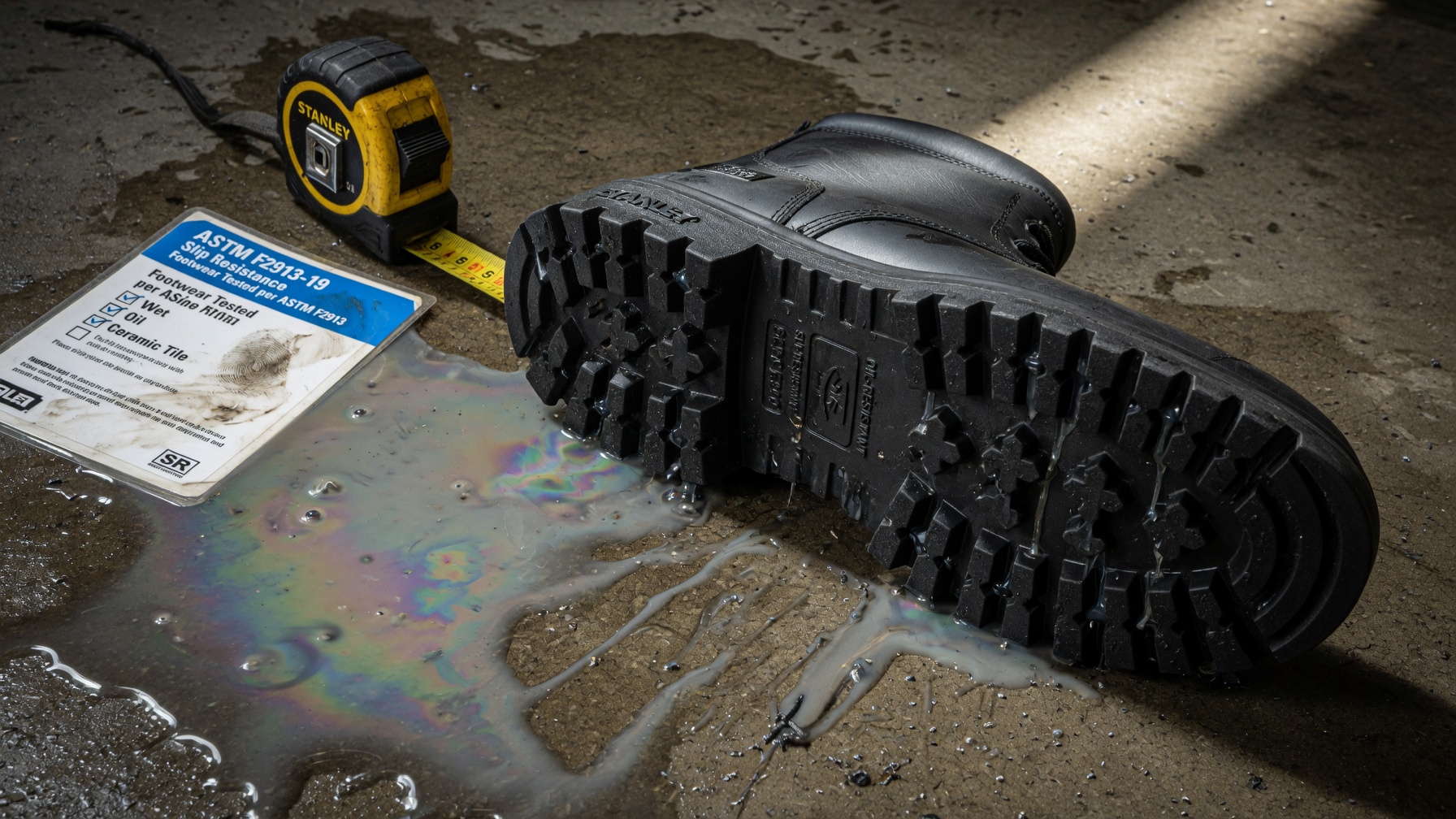
The tread pattern is the most visible feature of slip-resistant work boots. Deep lugs (the raised sections of the sole) channel water, oil, and mud away from the foot, allowing the rubber to make direct contact with the walking surface.
However, the secret weapon of non-slip footwear is often siping. Siping refers to thin, shallow slits cut into the rubber lugs. Much like the sipes on winter car tires, these slits flex and open up when pressure is applied. This action creates thousands of microscopic biting edges that grip slick surfaces, even when a thin layer of liquid is present.
Rubber Compounds and Oil-Resistant Boots
The chemical makeup of the outsole is just as important as the tread. Softer rubber compounds conform better to microscopic imperfections in the floor, providing superior traction. However, soft rubber wears out faster.
In environments with petroleum products, grease, or animal fats, standard rubber will degrade, swell, and lose its grip. This is where oil-resistant boots are vital. These outsoles are formulated with specialized polymers (like nitrile rubber or polyurethane) that resist chemical breakdown, ensuring* breakdown, ensuring the tread remains intact and functional even after constant exposure to harsh% exposure to harsh harshG exposure to harsh harsh chemicals.
Top Industries That Require Non-Slip Footwear
While anyone can benefit from betterB benefit from better traction, certain industries absolutely mandate the use- mandate the use of slip-resistant work boots due to the inherent dangers of their work environments.
Food Service and Healthcare
Commercial kitchens, dining areas, and hospital floors are notoriously slick. Spilled cooking; cooking oils, dishwater, and grease create extremely low-friction surfaces. In healthcare, sanitize( sanitize sanitize( sanitizing chemicalsD sanitizing chemicals and bodily fluids pose constant hazards. Workers in these fields require footwear with high coefficient of friction (COF) ratings specifically tested on wet and oily surfaces.
Construction and Manufacturing& Manufacturing
ConstructionB ConstructionAC Construction sites present unpredictable terrain. Mud, wet concrete, and uneven ground challenge( challenge( workers daily. Manufacturing facilities often have smooth concrete floors that become treacherous when combined with machine lubricants or coolant m( coolant mists. In these( In these industrial settings, slip-resistant work1 slip-resistant work boots must also incorporate safety! also incorporate safety toes (steel, composite, or alloy) and puncture-resistant plates to provide comprehensive( provide comprehensive protection.
Logging, Agriculture, and Landsc3 and Landscaping
Outdoor occupations face the elements daily. Rain, morning dew, and loose gravel make traction: make traction traction& make traction a daily battle. Deep-lugged, self-cleaning outsoles are essential here. If mud packs into the tread, the boot effectively becomes a smooth-soled shoe, rendering it useless. Self-cleaning treads expel( expel debris with each step, maintaining constant surface contact.
Key Features to Look for in Slip+ for Slip-Resistant Work Boots
When shopping for safety footwear, do not rely( rely on marketing buzzwords like “slip-resistant” without proof. Evaluate the technical specifications.
ASTM Ratings and Coefficient. Coefficient of Friction (COF)
Always look for footwear that meets the ASTM F2913-19 standard. This test measures the dynamic coefficient of friction (COF) of footwear on( footwear on wet tile and oily tile surfaces. A higher COF indicates better slip resistance. While there is no official “passing” COF score mandated by OSHA for all environments( for2 environments, industry experts generally( experts generally recommend a COF of 0.40 or higher for slippery conditions. Reputable brands will publish their COF test( COF test results0 test results, giving you concrete data rather than vague promises.
Comfort, Support, and Waterproofing
A boot can only protect you if you wear it. If your non-slip footwear is uncomfortable, you will be tempted to leave it at home. Look for features like:
- Shock-Absorbing Midsoles- Midsoles: EVA or polyurethane midsole( midsole( midsoleE midsole inserts cushion high-impact areas, reducing foot fatigue.
- Arch Support and Heel Stabilizers: Prevent ankle rolls on uneven surfaces.
- Waterproof Membranes: In wet environments, waterproof yet breathable boots keep your feet dry from the outside in, preventing( preventing maceration and fungal infectionsA fungal infections.
Understanding the Outsole Material Labels5 Outsole Material
- *BA Polyurethane (PU): Lightweight, excellent shock absorption, and highly resistant to oils and chemicals. Great for manufacturing and food processing.
- **Thermop!Thermoplastic Polyurethane (TPU= (TPU): Extremely durable and resistant to abras- resistant to abrasion and splitting. Ideal for construction and heavy industry.
- Rubber: Offers the best naturally high friction on dry and wet surfaces but can be heavier and susceptible to oil degradation unless specifically treated.
Caring for Your Slip-Resistant Work Boots
Even the best slip-resistant work boots will fail( will fail if not properly maintained. Grease, mud, and debris can fillF can fill clog the tread, and chemical exposure can degrade the rubber over time.
Cleaning the Outsoles
At the end of your shift, take a stiff brush and warm, soapy water to scrub the outsoles. Remove all packed mud, grease, and gravel. Do not use harsh solvents like gasoline or undiluted degreasers to clean( clean rubber, as these can break down the chemical compounds( chemical compounds that give the sole its traction.
Knowing When to Replace Them
Safety footwear does not last forever. Inspect your boots regularly. If the lugs have worn down to’ worn% worn smooth, the sipes have disappeared, or the rubber has begun to crack and harden, your boots are no longer slip-resistant. The general rule of thumb for industrial workers is to replace their boots every 12 to 18 months, but high-mileage workers on slick surfaces may need to replace them sooner.
Conclusion: Step Securely with Slip-Resistant Work Boots
Navig( Navigating slick, hazardous surfaces is a daily reality for millions of essential workers. Relying on standard footwear in these( in these environments is a dangerous gamble that can lead to life-altering injuries. Slip-resistant work boots provide the vital traction, stability, and occupational safety needed to perform your job with confidence. By understanding the science of siping, the importance of oil-resistant rubber compounds, and the strict ASTM F2913-19 testing standards, you can make an informed decision. Do not compromise on your safety. Choose high-quality slip-resistant work boots that meet industry standards, maintain them diligently, and ensure every step you; step you take is a secure one.
Frequently Asked Questions (FAQs)
1. What makes a work boot slip-resistant?
D* 1. What makes a work boot slip-resistant?
Slip-resistant work boots use specialized soft rubber compounds and tread designs featuring deep lugs and siping (thin slits) that flex to grip microscopic3 to grip wet or oily surfaces.
2. What is the ASTM standard for slip! 2. What is the7 What is the ASTM standard for slip-resistant footwear?
The primary standard is ASTM F2913-19, which measures the dynamic coefficient of friction (COF) of footwear on wet and oily surfaces to verify traction.
3. Are slip-resistant boots the same as oil! 3. Are slip-resistant boots the same as oil-resistant boots?
Not always; slip-resistant boots provide traction on wet surfaces, while oil-resistant boots use special rubber compounds that do not degrade when exposed to petroleum or)% petroleum or grease—the best boots are both.
4. How long do slip+ 4. How long do slip-resistant work boots last?
Most high-quality slip-resistant work boots last between 12 to 18 months, but the outsoles should be replaced immediately if the tread or sipes( sipes become worn smooth.
5. Can@8 5. Can I wear slip-resistant boots on construction sites?
Yes, many slip-resistant work boots also feature composite or steel safety toes and puncture! puncture-resistant plates, making them ideal for slick construction environments.
6. Does OSHA require slip-resistant2 6. Does OSHA require slip-resistant boots?
OSHA requires protective footwear when working in hazardous conditions, and while they do not mandate” do not mandate a specific slip! specific slip rating, employers must provide appropriate non-slip footwear to mitigate known fall hazards.